What Are Lab-Grown Diamonds? Meaning and How They Compare
Lab-grown diamonds are real diamonds made in a laboratory, with the same chemical structure as mined stones. Learn how they are made and how they compare.
Nov 4, 2026 · 4 min read · House of Diams
A lab-grown diamond is a real diamond grown in a laboratory instead of being mined from the earth. It's made of carbon atoms in the same crystal structure as a mined diamond, so it has the same hardness, sparkle and chemical makeup. The difference is how and where it formed, not what it is.
This guide explains what lab-grown diamonds are, what else they're called, how they're made and how they compare with mined diamonds and with look-alike stones.
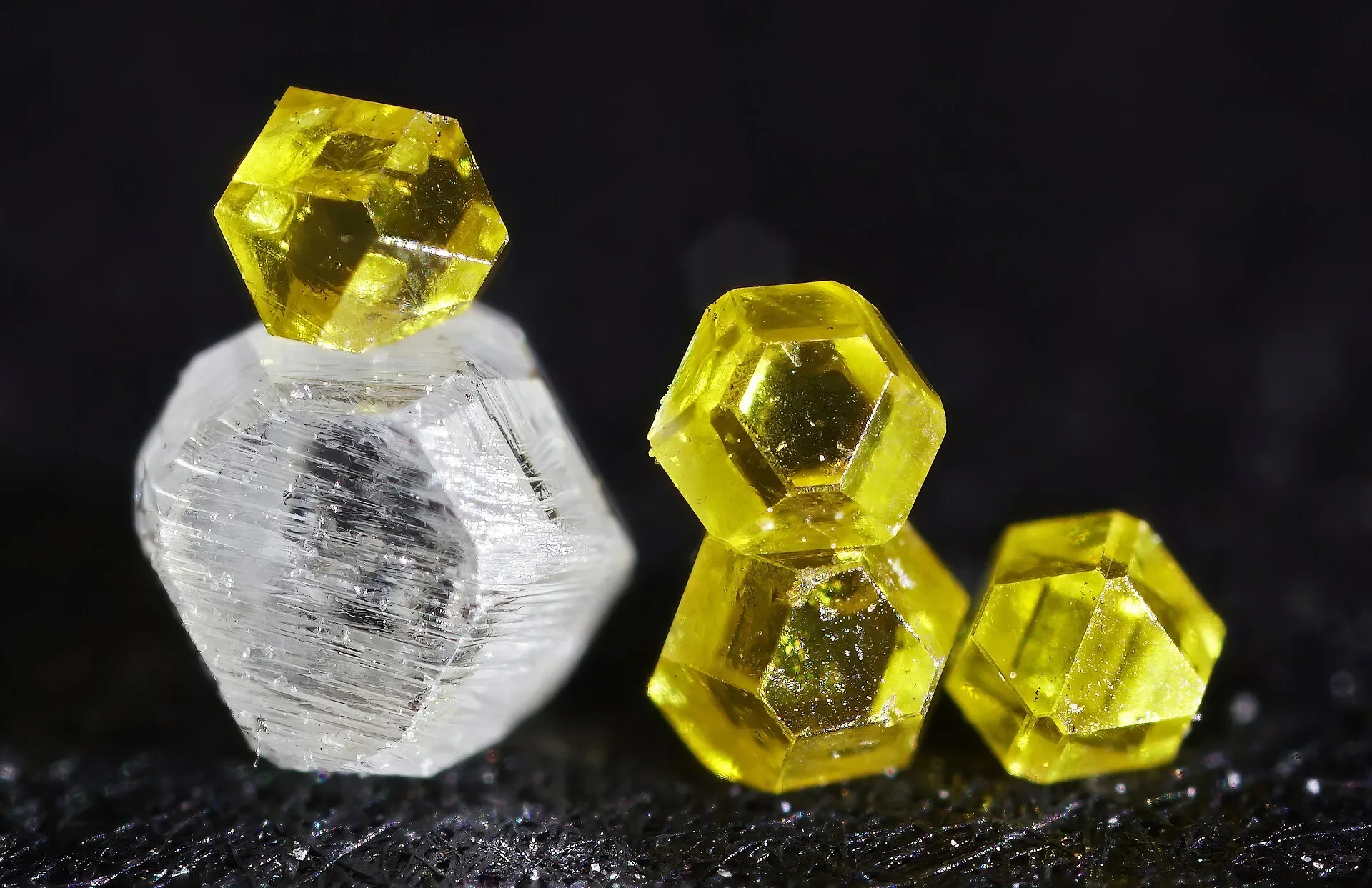
Lab-grown diamond crystals. Nitrogen gives the yellow ones their color. Image: Bilovitskiy / CC BY 4.0, via Wikimedia Commons.
Other names for lab-grown diamonds
You'll see several names for the same thing:
Lab-grown diamond or lab diamond. The everyday terms.
Laboratory-created or lab-created diamond. Common in jewelry listings.
Man-made diamond. An older term that's still widely searched.
Synthetic diamond. Common in science and industry. Here "synthetic" means made by people. It doesn't mean fake.
In its 2018 Jewelry Guides, the US Federal Trade Commission removed the word "natural" from its definition of a diamond. Sellers still have to make clear that a stone is lab-grown, using a term such as "laboratory-grown" or "laboratory-created."
How are lab-grown diamonds made?
There are two main growing methods. Both start with a tiny diamond seed.
HPHT (high pressure, high temperature). The seed sits in carbon inside a press that recreates the crushing pressure and heat found deep underground. The carbon melts into a metal mix and crystallizes onto the seed.
CVD (chemical vapor deposition). The seed sits in a low-pressure chamber filled with carbon-rich gas. The gas is heated until carbon atoms fall onto the seed and build up, layer by layer.
General Electric produced the first repeatable synthetic diamonds in 1954, using an HPHT press. They were small and dark, and were used in industry for cutting and grinding. GE reported gem-quality crystals around 1970. Over the following decades, CVD and better HPHT equipment made larger, colorless stones practical, and lab-grown diamonds became a mainstream choice for jewelry.
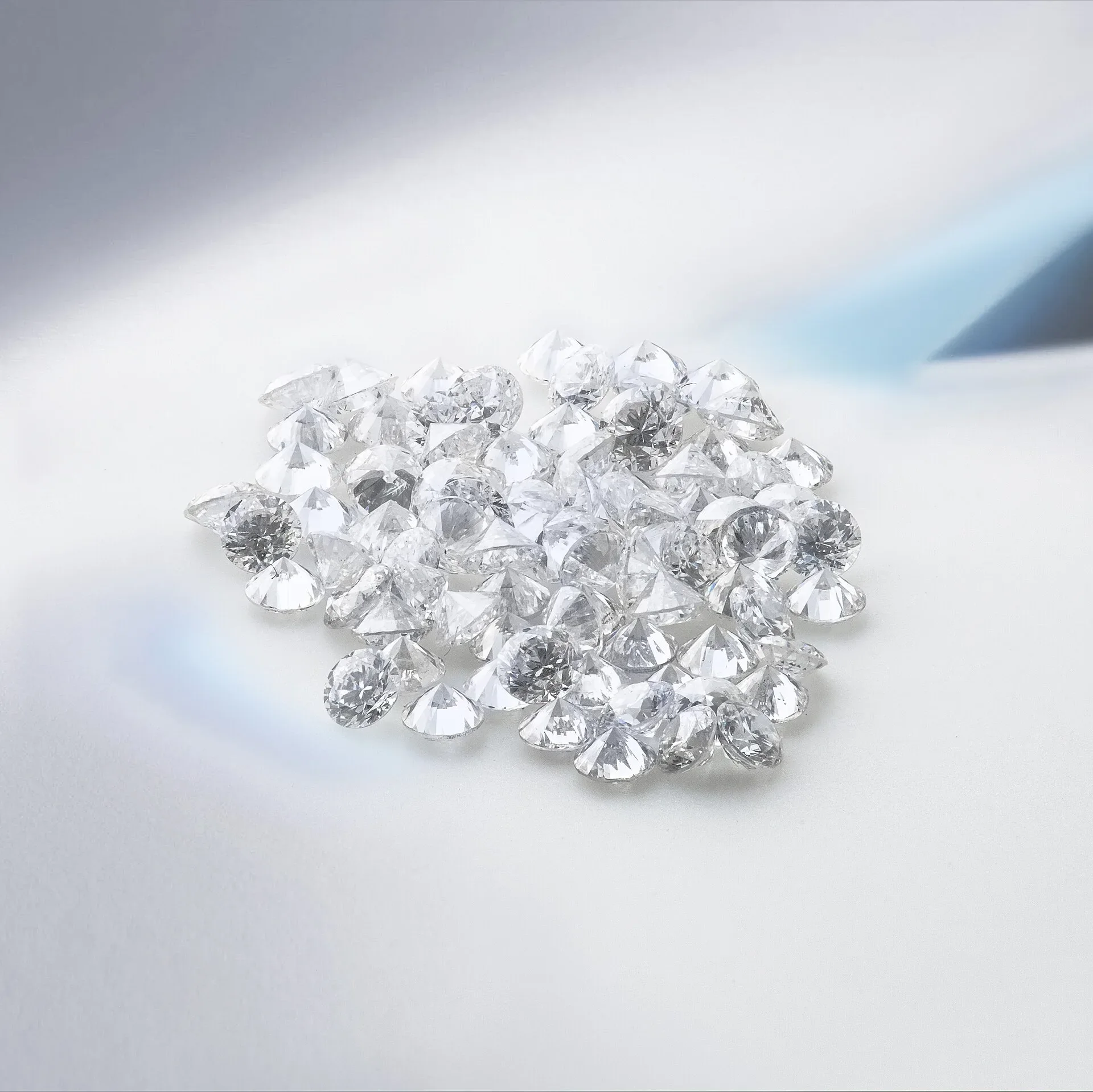
Lab-grown diamonds. Image: Igor Stratichuk / CC BY-SA 4.0, via Wikimedia Commons.
Are lab-grown diamonds real diamonds?
Yes. A lab-grown diamond is carbon in a diamond crystal, and it scores 10 on the Mohs hardness scale, the same as a mined diamond. Our guide to whether lab-grown diamonds are real goes into the evidence.
A standard handheld diamond tester will usually read a lab-grown diamond as a diamond, because it measures properties the two share. You can't tell them apart by eye. A gem lab uses specialist equipment to confirm how a stone formed.
Lab-grown vs mined diamonds
Material. The same: crystallized carbon.
Look. The same range of sparkle, graded on the same 4Cs.
Origin.Lab-grown: grown in weeks in a controlled chamber. Mined: formed deep in the earth over a very long time.
Price. Lab-grown diamonds generally cost less than mined diamonds of similar size and quality.
Rarity and resale. Mined diamonds are rarer. Neither type is a sure investment, and lab-grown stones usually have lower resale value.
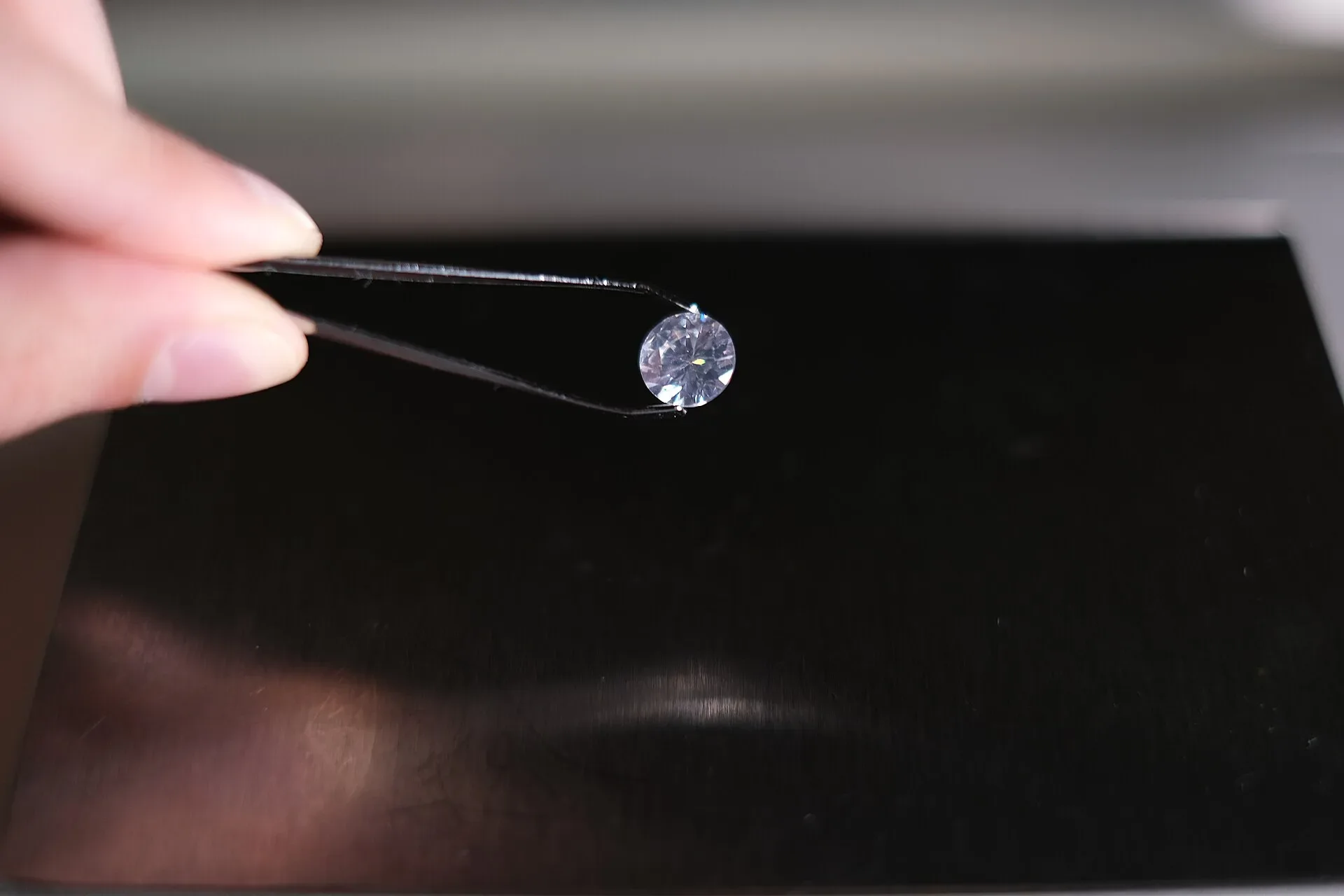
Image: Davidmimay / CC BY 4.0, via Wikimedia Commons.
Lab-grown diamonds are not simulants
A simulant is a different material that only looks like a diamond. Cubic zirconia and moissanite are the best known. Cubic zirconia is softer and shows wear more quickly. Moissanite is hard, but it's made of silicon carbide and shows more colorful flashes. Neither one is a diamond, whether it's grown in a lab or not.
What are the drawbacks of lab-grown diamonds?
Resale. Expect a much lower resale value than the purchase price. Buy one because you want to wear it, not as an investment.
Changing prices. Prices have moved a lot in recent years as production has grown.
Rarity. If a stone's age and rarity matter most to you, a mined diamond will mean more.
Usually a matter of weeks, depending on the size and the method. A mined diamond formed over a far longer time.
Do lab-grown diamonds last?
Yes. They have the same hardness as mined diamonds and don't wear away with everyday use. Like any diamond, they need occasional cleaning.
Is it worth buying a lab-grown diamond?
If you want a larger or better-quality stone for your budget and don't plan to resell it, it's usually good value. If rarity or resale matters most, consider a mined stone.