Education
Diamond Clarity Chart
A diamond clarity chart from Flawless to I3: what each grade means, which grades look clean to the eye and which clarity to buy.
Read articleEducation
The diamond color scale from D to Z in one chart: what each grade looks like, how color shows in white, yellow and rose gold, and which color to buy.
Nov 22, 2026 · 9 min read · House of Diams
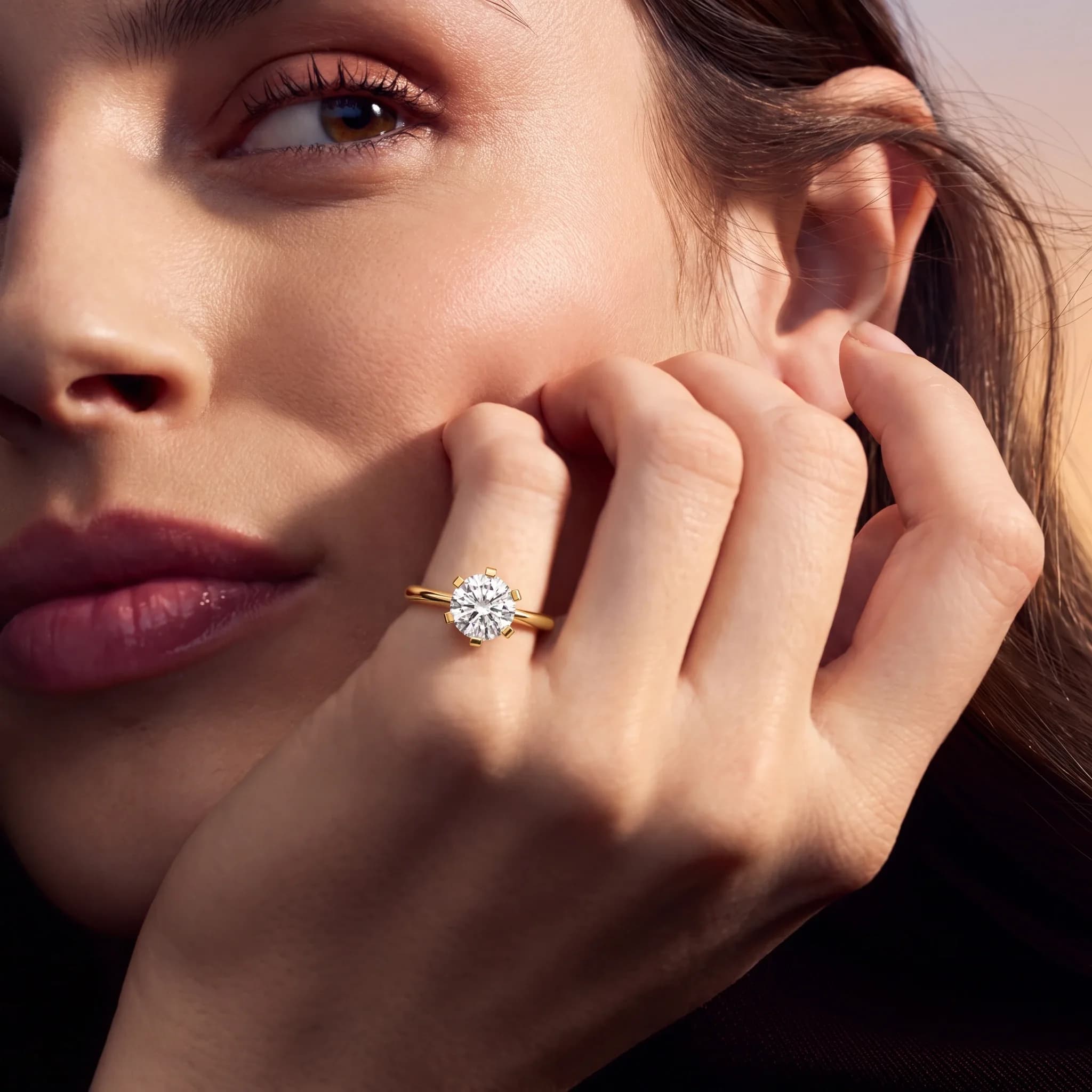
Diamond color grades how close a diamond is to colorless, on a scale from D to Z. The scale was created by GIA (the Gemological Institute of America). D is completely colorless, and each letter after it shows a little more yellow or brown, up to Z, which has a light yellow or brown tint. The 23 grades fall into five groups. For most buyers, the best value is a near-colorless G or H in white gold, or H to J in yellow or rose gold, where the diamond still looks white face-up.
Below is the full diamond color chart, what each grade looks like, how color is graded, and which color to choose for your metal, shape and size.
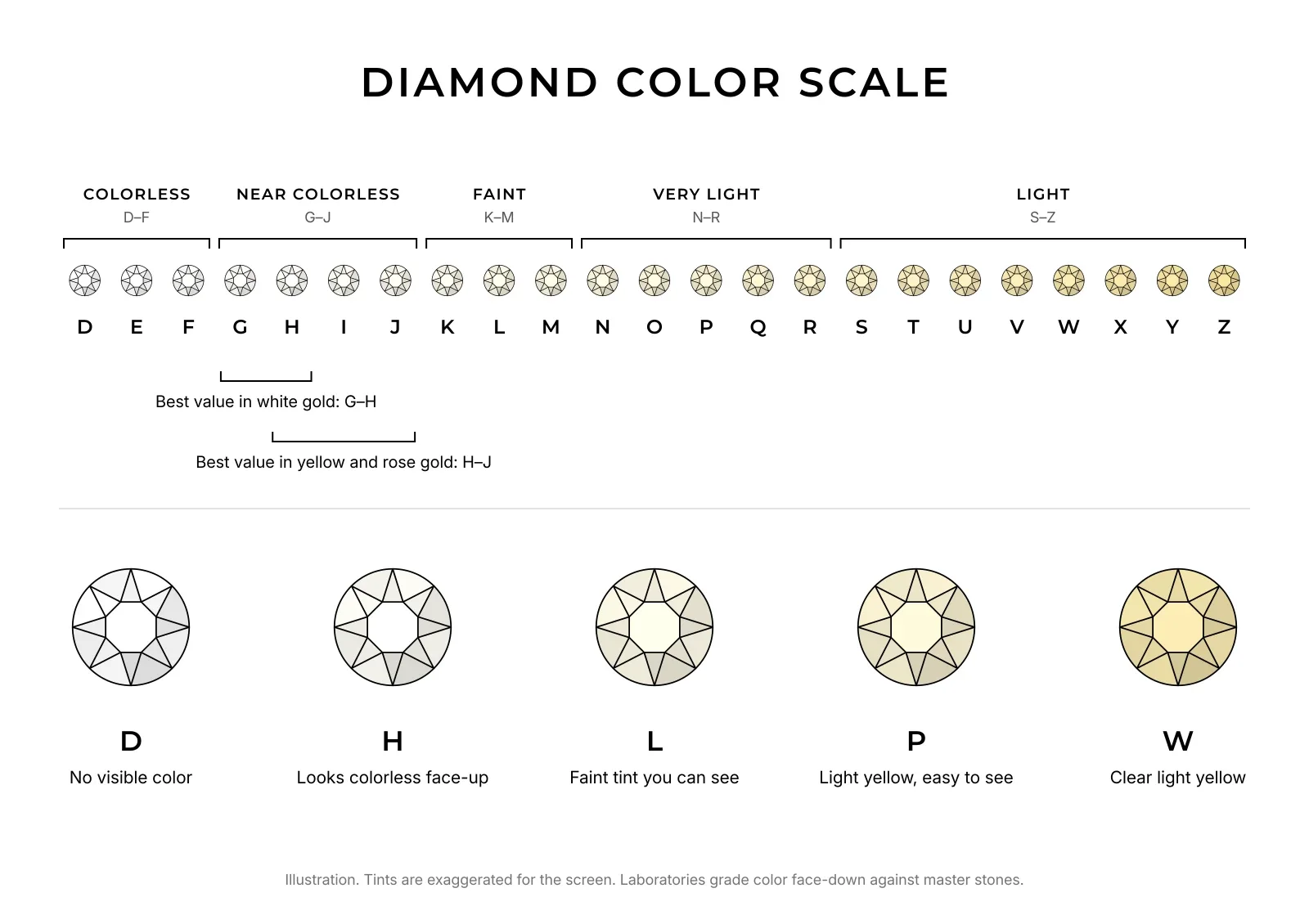
From best to worst, the D-to-Z scale has five groups:
D, E and F (Colorless). No visible color. The differences between D, E and F are barely detectable, even to a trained grader. These are the rarest and most expensive grades. A colorless diamond is one graded D, E or F.
G, H, I and J (Near colorless). Face-up, these look colorless to most people, especially once set. A slight warmth may show in I and J, usually only to a trained eye or next to a whiter stone.
K, L and M (Faint). A faint yellow tint you can see face-up, more easily in larger stones. It looks warm in white gold and softer in yellow or rose gold.
N to R (Very light). A light yellow or brown color that's easy to see.
S to Z (Light). A clear light yellow or brown color. Z is the end of the normal color range.
According to GIA, most diamonds sold in jewelry stores fall between colorless and near colorless. Each letter covers a range of color, not one exact shade, so two diamonds with the same grade can look slightly different.
Why does the scale start at D? Before GIA's scale, sellers used letters such as A, B and C, numbers and loose terms like "blue white", and the results were inconsistent. GIA started at D so the new scale had no link to those older systems.
You'll often see color and clarity written together, such as G VS1. G is the color grade, and VS1 is the clarity grade, which has its own scale. See our diamond clarity guide for every clarity grade, and the 4Cs of diamonds explained for how color fits with cut, clarity and carat.
Diamonds with more color than Z, or with other colors such as pink or blue, aren't graded on the D-to-Z scale. They're called fancy-colored diamonds, and laboratories grade them on a separate scale.
Laboratories grade color by comparing the diamond with master stones of known color, under controlled lighting. The diamond is placed upside down and viewed through its side. Face-up, the cut, shape, size, fluorescence and even the setting change how much color you see, so a face-down view is the most neutral. At IGI, several graders give their opinion independently, and the grade is set once enough of them agree.
The color itself usually comes from traces of nitrogen or small irregularities in the diamond's crystal structure, which absorb part of the light passing through it.
The grade is printed on the diamond's grading report. House of Diams pieces come with IGI and GIA certificates. To see what these two laboratories do, read GIA vs IGI certification.
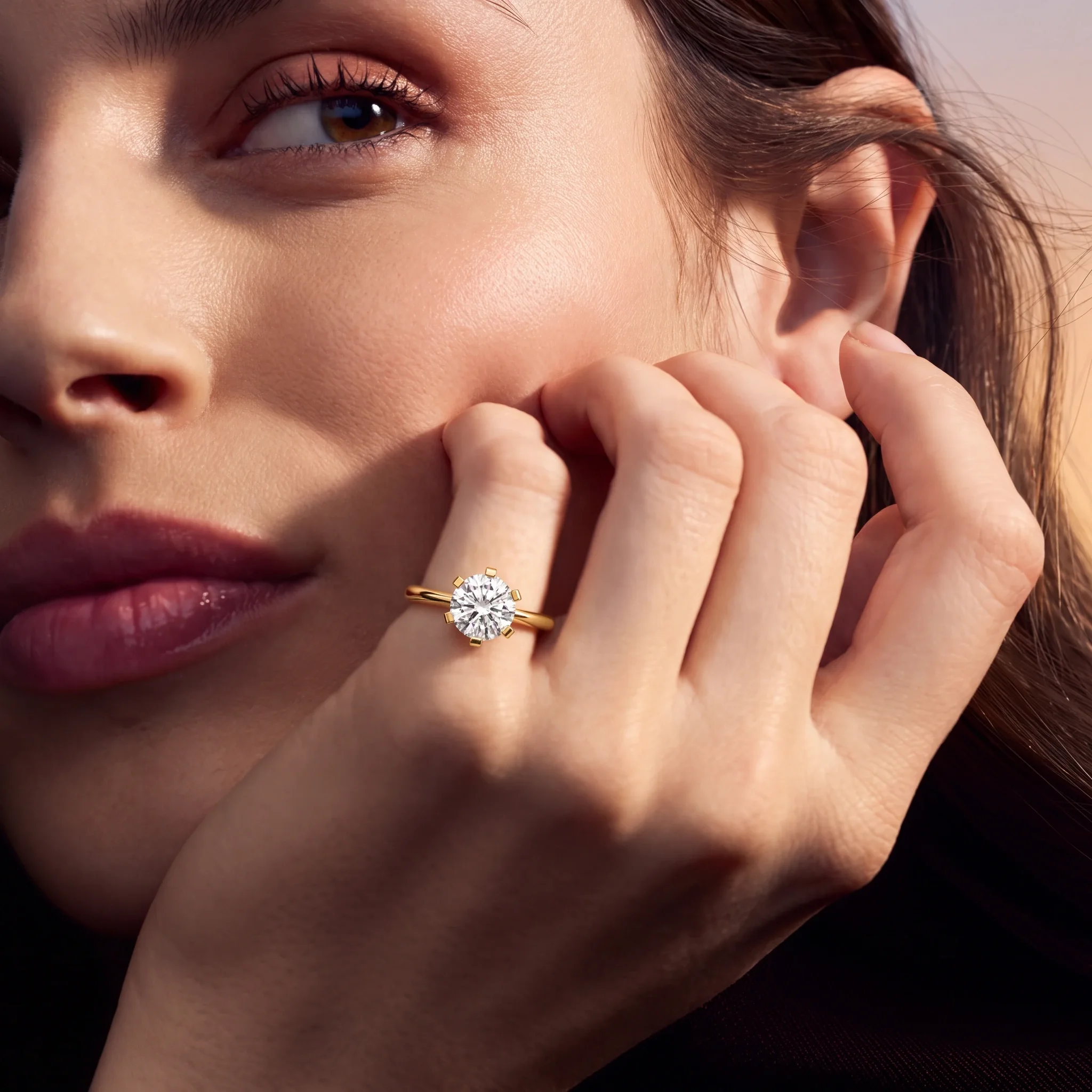
Yes. G and H are high near-colorless grades. Face-up in a ring, they look colorless to most people, and they cost noticeably less than D, E or F. That's why they're often called the best balance of looks and price.
G is the top of the near-colorless range. Its slight tone is very hard to see once the diamond is set.
H is often seen as the best value. It looks white face-up in white, yellow or rose gold.
I and J show a little warmth, usually noticeable only to a trained eye or next to a whiter stone. They're good value in yellow and rose gold, and in smaller round diamonds.
Are G-H diamonds good quality? Yes. Color is only one part of quality. Cut has the biggest effect on sparkle, and a well-cut G or H diamond looks bright and white.
D vs E. Both are colorless. The difference is barely detectable, even to a trained grader comparing the stones face-down. D costs more because it's rarer. Choose D only if you want the top grade itself.
D vs G. D is colorless, and G is the top of near colorless. Face-up in a setting, most people can't tell them apart, and G costs much less.
FG vs GH. Color is sometimes given as a range, especially for small diamonds such as those in a pavé band or a halo. FG is slightly whiter than GH. Both look white face-up. FG is worth it next to a colorless center stone, or for an icy white look in white gold.
Which diamond color is better, D or G? On a grading report, D. To the eye, once set, the two usually look the same, so G is the smarter buy for most people.
Color also has a big effect on price. GIA notes that in the normal color range, the closer a diamond is to colorless, the higher its price per carat, with an especially large jump into the colorless grades. Moving from D to F down to G or H is one of the easiest ways to save without a difference you can see.
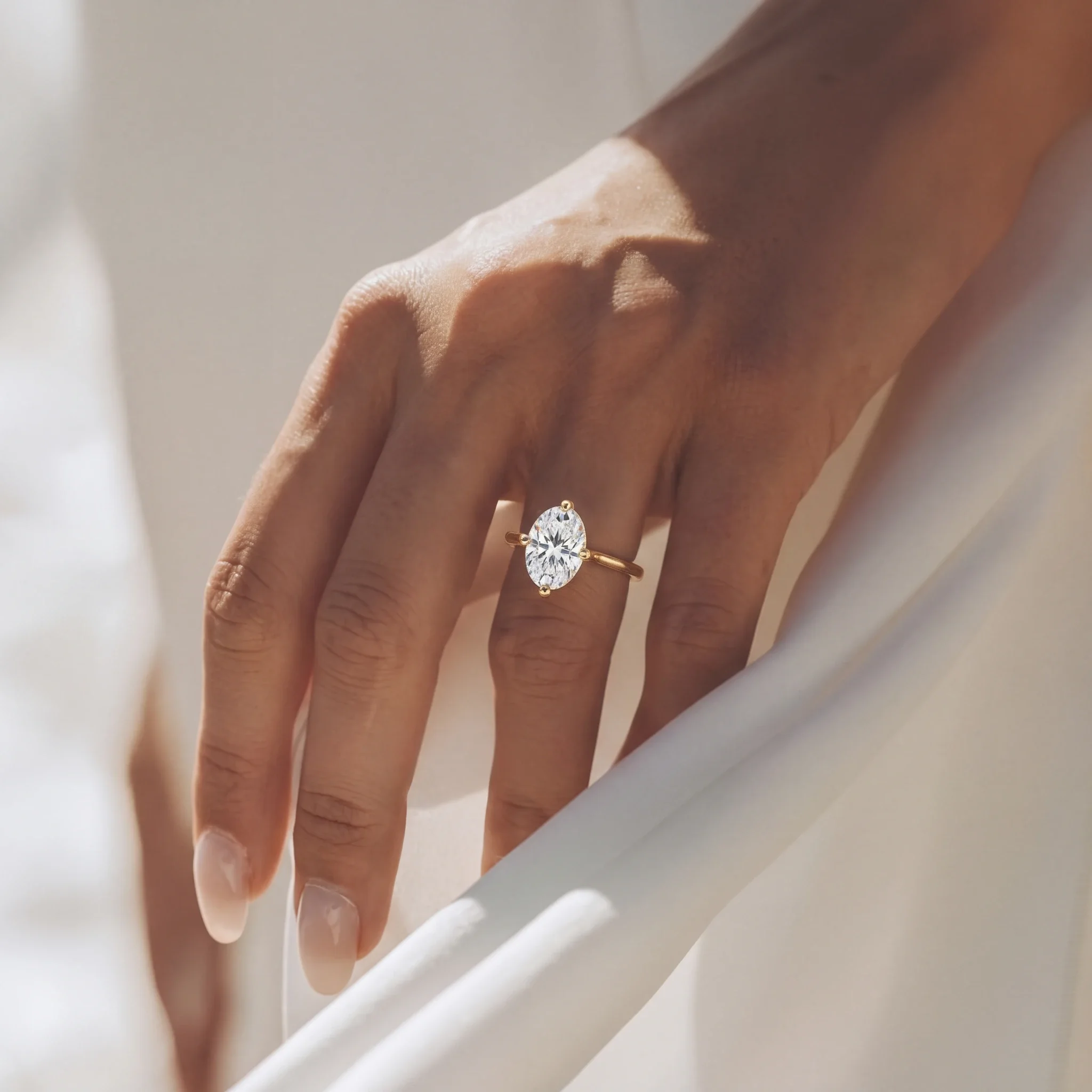
The metal around a diamond changes how its color looks. White metal shows a tint more clearly, while yellow and rose gold reflect warmth into the stone and hide a slight tint.
White gold: G or H for most center stones. White gold is usually plated with rhodium, a bright white metal, so a warm stone stands out against it. Choose D to F if you want an icy white look, or I for a small round diamond.
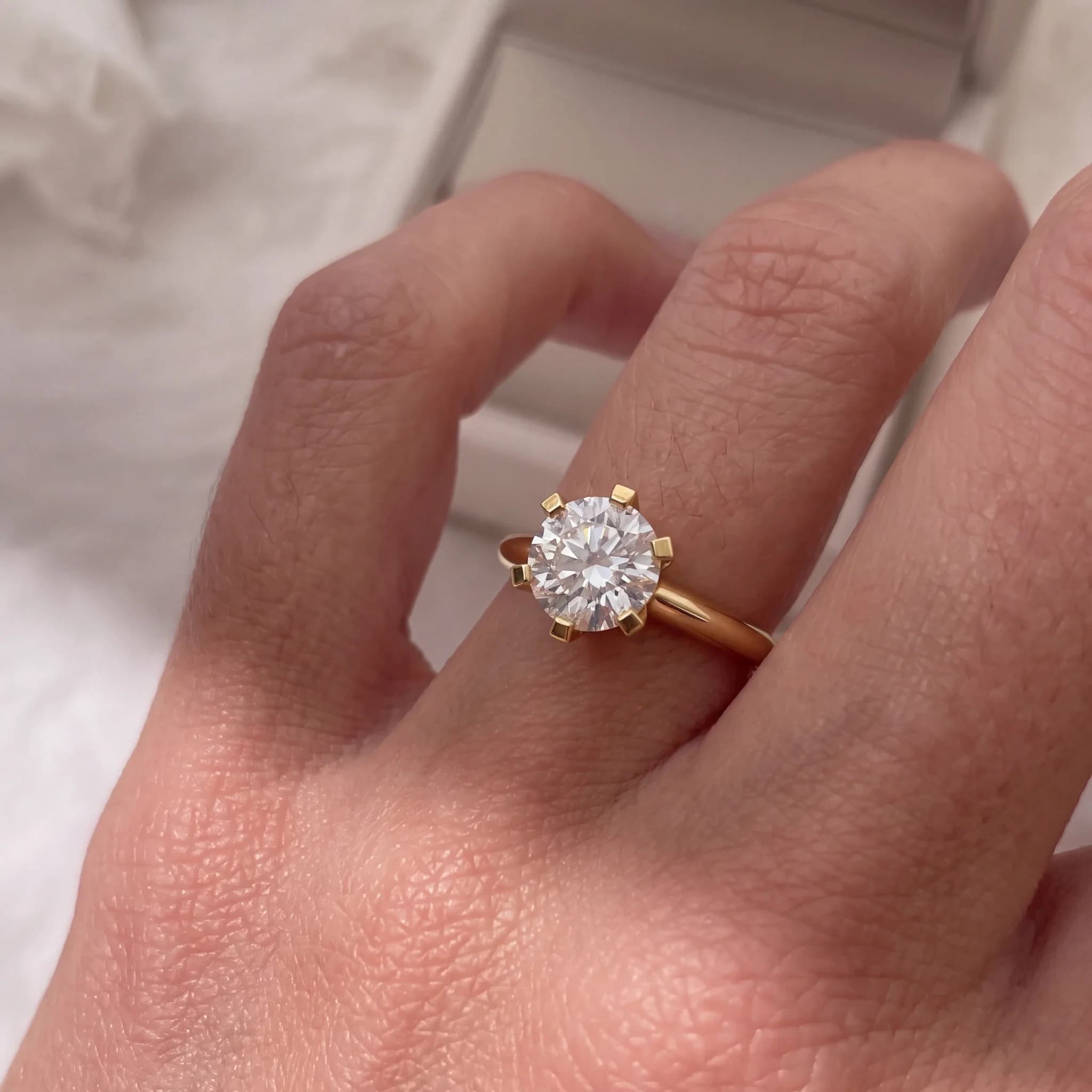
Yellow gold: H to J. The warm metal makes a near-colorless stone look white, and K can look attractive if you like a warm tone. A D to F diamond picks up some yellow from the metal, so you pay for whiteness you may not see.
Rose gold: H to J, as with yellow gold. The pink tone of the metal hides a slight warmth.
House of Diams pieces are made in 10K, 14K or 18K gold, in white, yellow and rose. The karat also changes the shade of the gold a little. For more, read how gold karat affects color and wear.
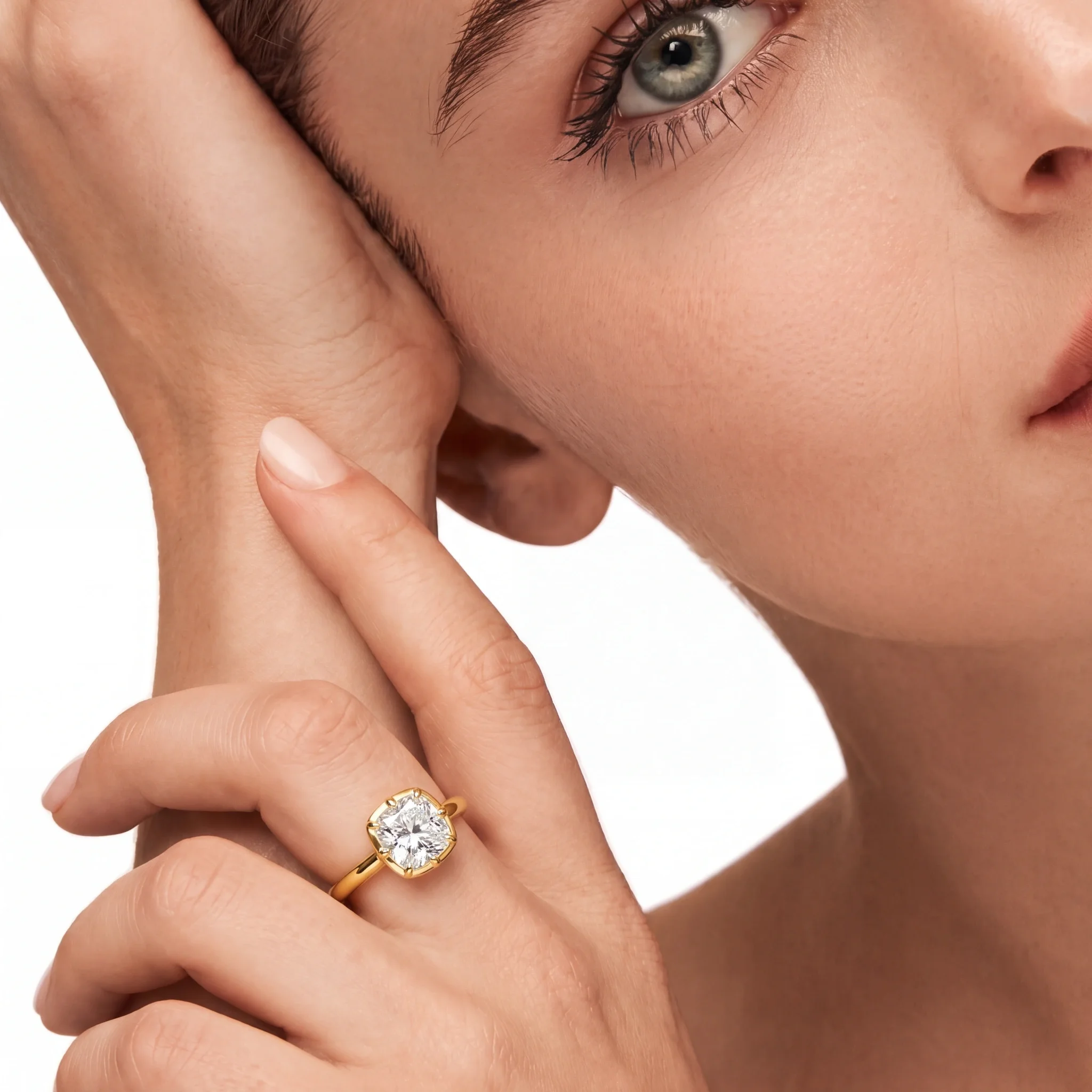
Shape and size change how easily color shows:
Round. Hides color best. Its many facets return a lot of white light, so G to I usually looks white.
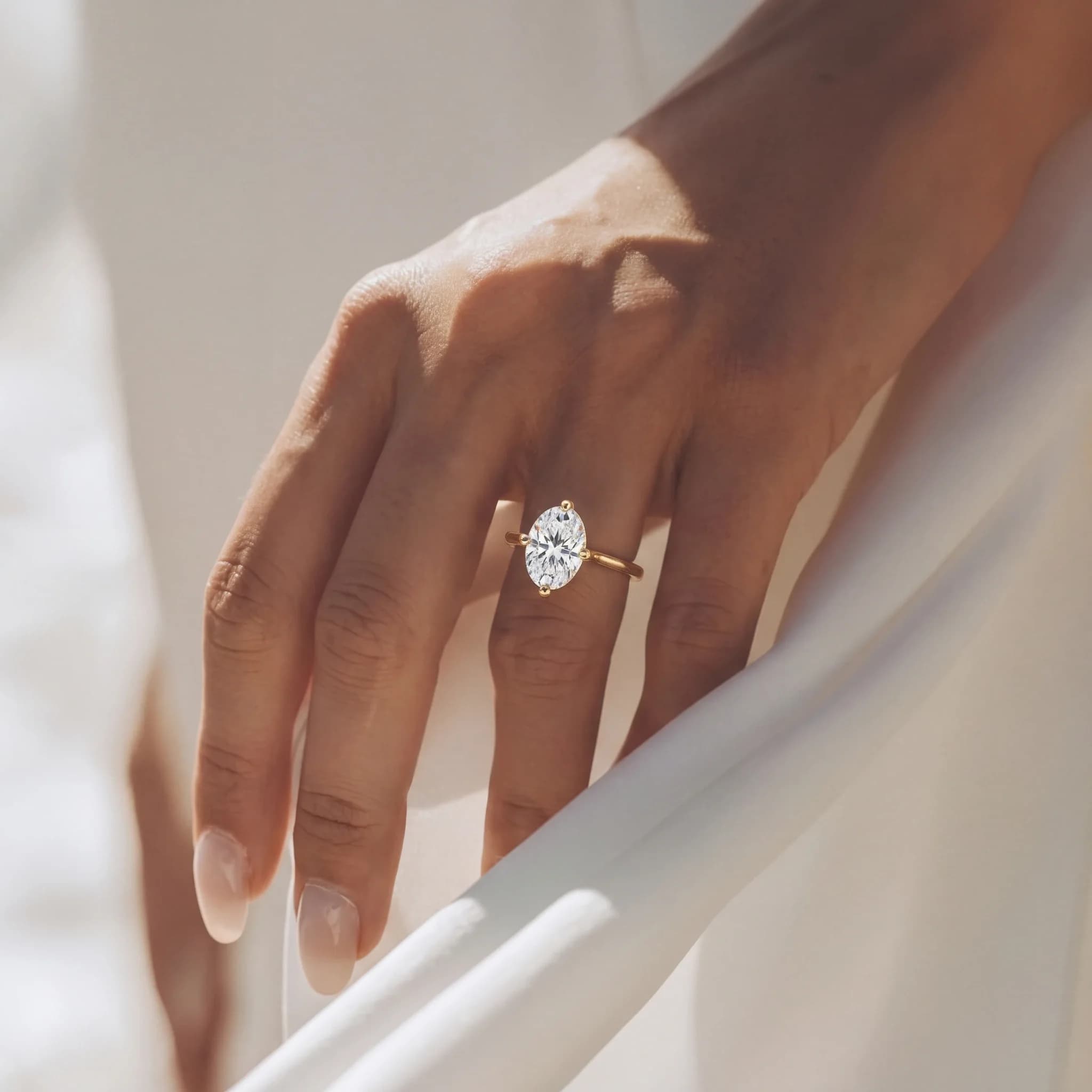
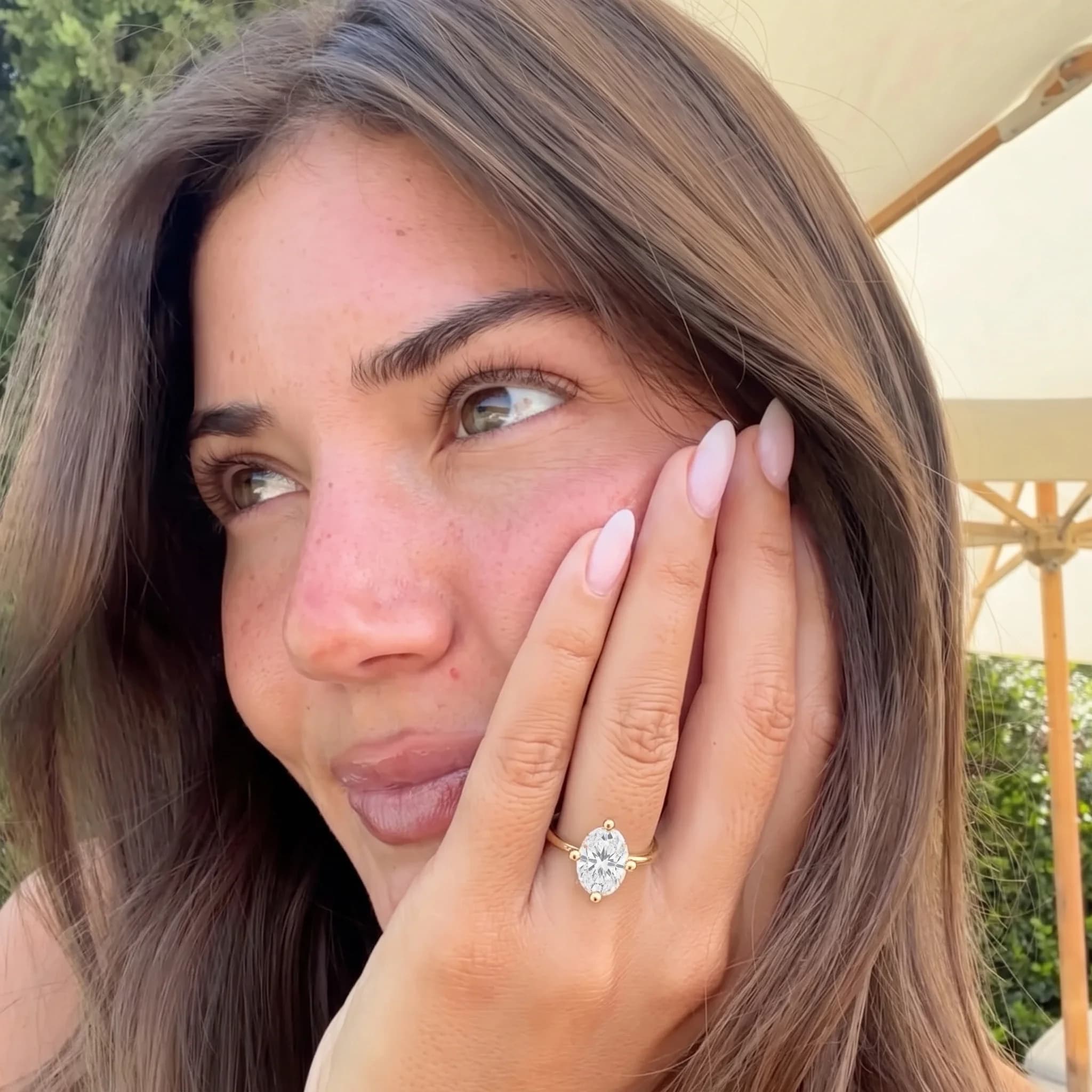
Oval, pear, marquise and princess. Show color a little more, often at the ends or corners. G or H is a safe choice.
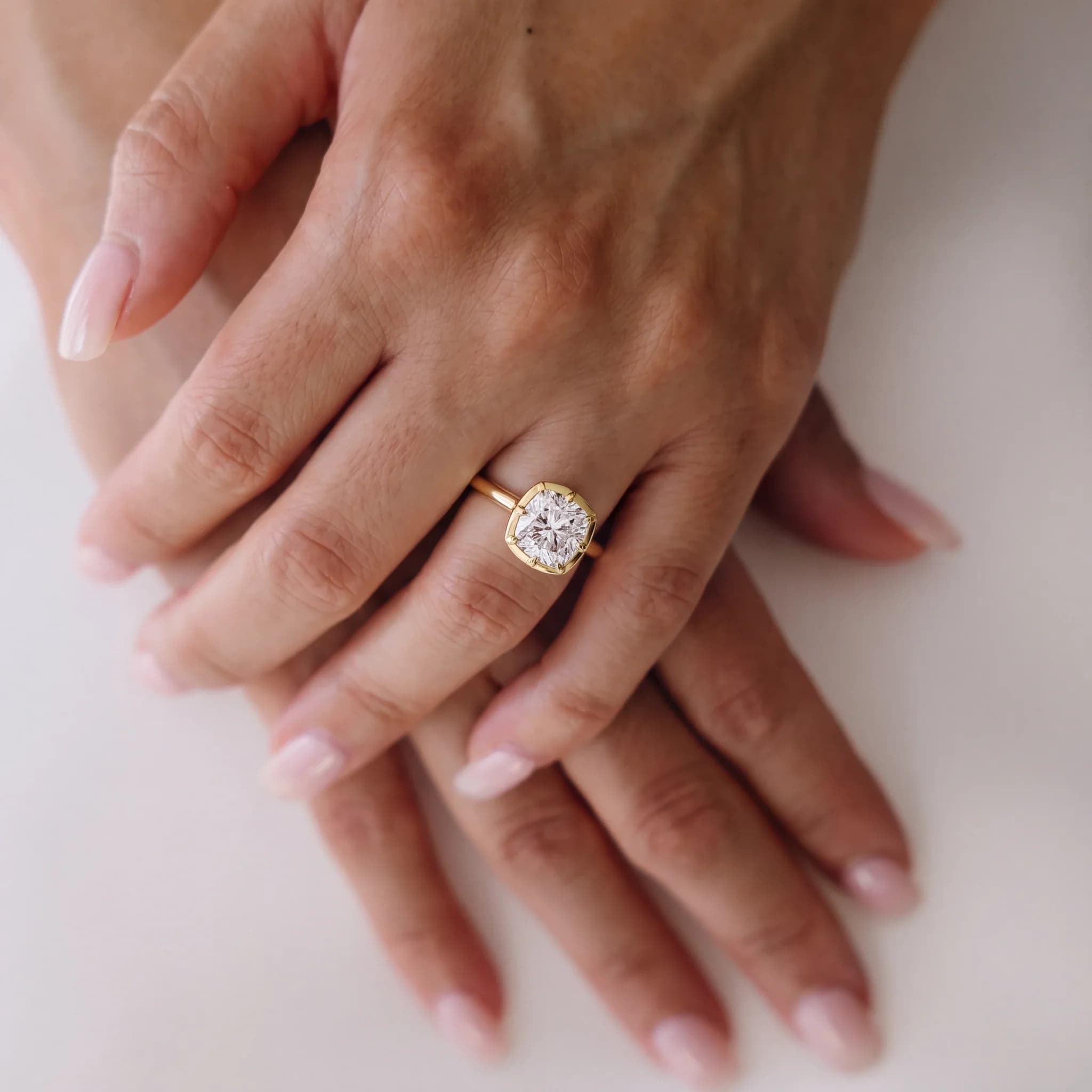
Emerald, Asscher, cushion and radiant. Show color more easily. Emerald and Asscher cuts have a large, open top facet that works like a window, and cushion and radiant cuts tend to concentrate color. Go one grade higher than you would for a round.
Large stones. The bigger the diamond, the easier its color is to see. For a large center stone, consider one grade higher.
Small stones. In stud earrings, pavé and halos, color is hard to see, so a lower near-colorless grade looks fine.
For more on how shapes differ, see our diamond shapes guide.
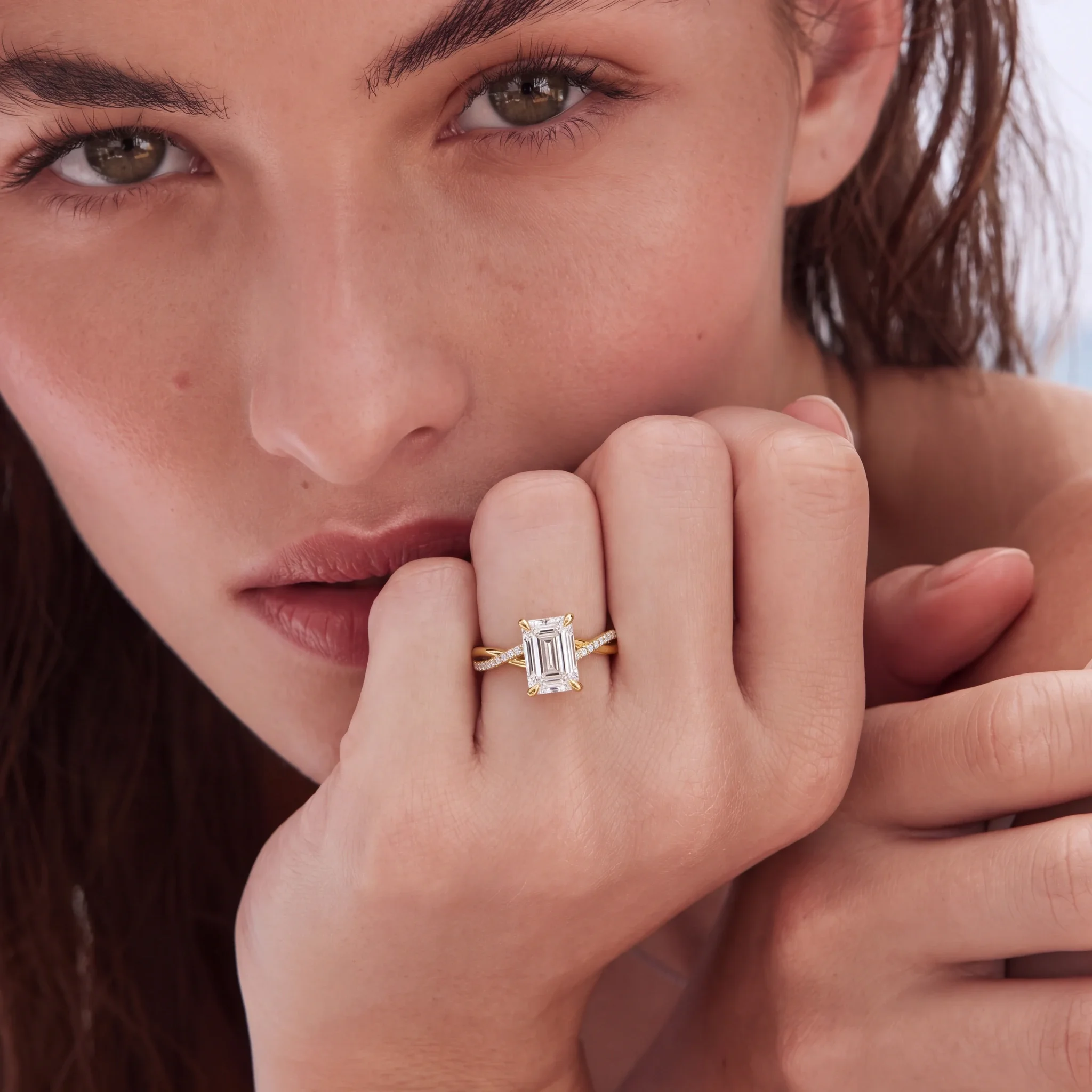
Fluorescence is a glow some diamonds give off under ultraviolet light, which is present in sunlight. It's listed on the grading report separately from color. According to GIA, about 35 percent of gem diamonds show fluorescence under the right conditions, and blue is the most common.
Blue fluorescence can make a slightly yellow diamond look whiter in sunlight, because blue and yellow cancel each other out. If it's too strong, it can make a diamond look cloudy or oily. Faint or medium fluorescence rarely changes how a diamond looks. If a report says strong or very strong, look at the stone or its video in daylight before you decide.
Lab-grown diamonds are graded on the same D-to-Z color scale as natural diamonds at IGI, and the letters mean the same thing. GIA said in 2025 that more than 95 percent of lab-grown diamonds entering the market fall into a very narrow range of color and clarity.
Many CVD diamonds grow with a brown tint and are then treated with high pressure and high temperature to improve their color. This is called post-growth treatment. In a 2024 study, GIA reported that about 80 percent of the CVD-grown diamonds submitted to it had been treated this way. A treated lab-grown diamond is still a diamond. An IGI report can note the growth method, CVD or HPHT, and any treatment found in its comments section, so read that section or ask the jeweler.
To learn more, read what lab-grown diamonds are and our comparison of CVD vs HPHT lab-grown diamonds.
For natural diamonds, GIA and IGI both grade color on the D-to-Z scale, comparing each stone with master stones. For lab-grown diamonds, they now work differently:
IGI gives lab-grown diamonds a D-to-Z color grade, the same as natural diamonds.
GIA stopped using its natural-diamond color and clarity grades for lab-grown diamonds in 2025. Since October 1, 2025, it places a lab-grown diamond in one of two groups: Premium, which needs D color, or Standard, which allows E to J, along with clarity and finish requirements. A stone outside those ranges gets no GIA assessment. Older GIA lab-grown reports may still show a letter grade.
So compare like with like. When you weigh two diamonds, compare grades from the same laboratory. To see what else a report includes, read what IGI certification means.
Best value in white gold: G or H.
Yellow or rose gold: H to J.
Emerald, Asscher, cushion or radiant cut: one grade higher than for a round, such as G instead of H.
Large center stone: one grade higher, because color is easier to see as size goes up.
Stud earrings and small stones: H to J.
The whitest possible look: D to F, in white gold.
D is the best color grade. It's completely colorless and the rarest. Most buyers don't need it, because G and H look colorless face-up and cost much less.
In the normal color range, Z is the lowest grade, with a light yellow or brown tint, so S to Z diamonds cost the least. Fancy yellow diamonds with more color than Z are graded on a separate scale and valued differently.
J is the lowest near-colorless grade. It can show a slight warmth face-up, especially in a large stone or in white gold. In yellow or rose gold, or in a small round diamond, a J usually looks white and costs less.
K is the first faint grade, and its tint is usually visible face-up. It can look warm and attractive in yellow or rose gold, but in white gold it often looks yellow. Choose J or higher if you want a white look.
Browse our engagement rings and solitaire engagement rings to see diamonds in white, yellow and rose gold settings, or our diamond stud earrings. For more guides, see our diamond quality guides. If you have a question about a stone, contact us.
A diamond clarity chart from Flawless to I3: what each grade means, which grades look clean to the eye and which clarity to buy.
Read article
A diamond carat size chart in mm for nine shapes from 0.5 to 5 carats, how big each carat looks on the hand and what size to choose for a ring or studs.
Read article
Use our necklace length chart to see where 14 to 36 inches sits. Learn how to measure, compare 16 vs 18 inch necklaces and pick a length for any pendant.
Read article


