Education
Diamond Color Scale
The diamond color scale from D to Z in one chart: what each grade looks like, how color shows in white, yellow and rose gold, and which color to buy.
Read articleEducation
A diamond carat size chart in mm for nine shapes from 0.5 to 5 carats, how big each carat looks on the hand and what size to choose for a ring or studs.
Nov 22, 2026 · 11 min read · House of Diams
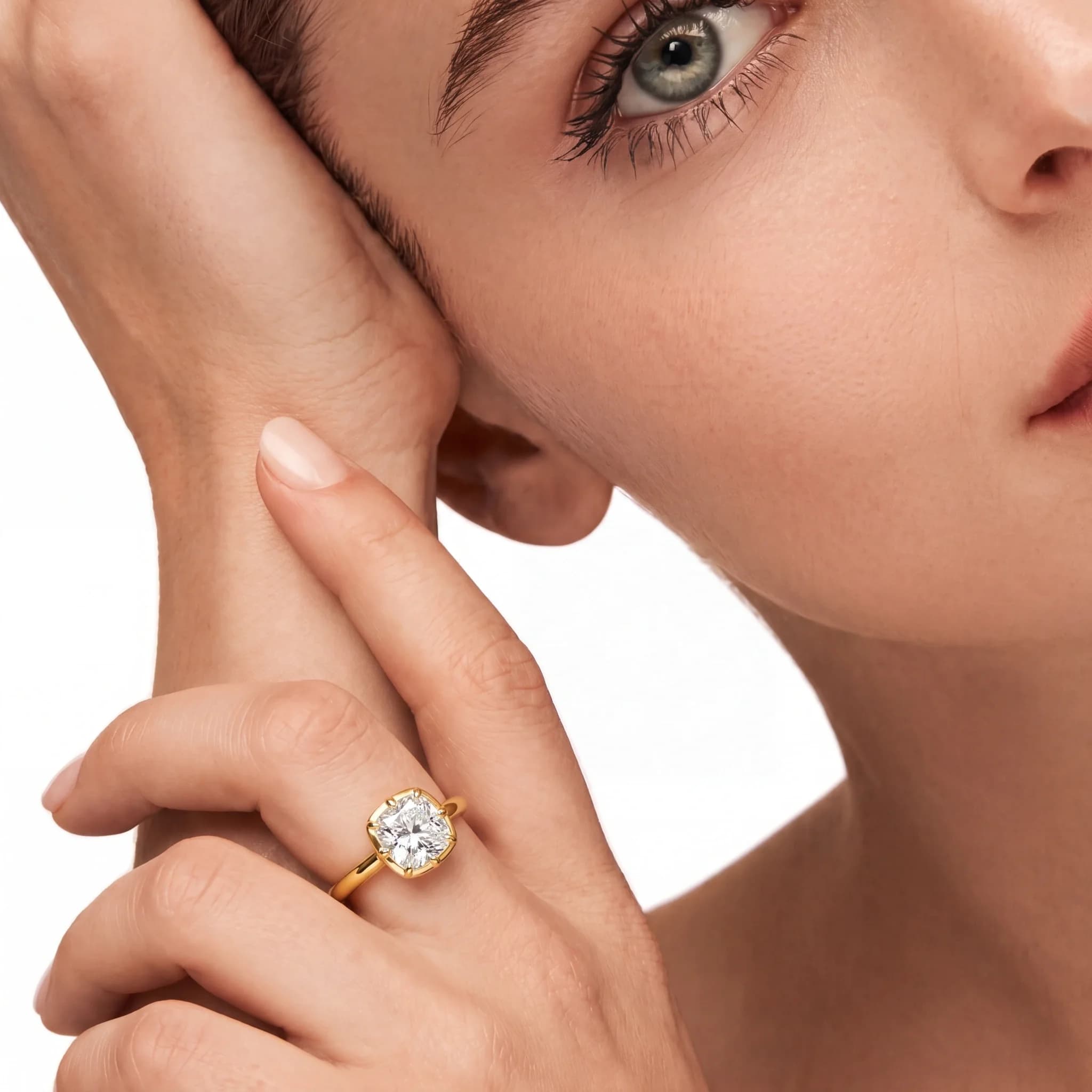
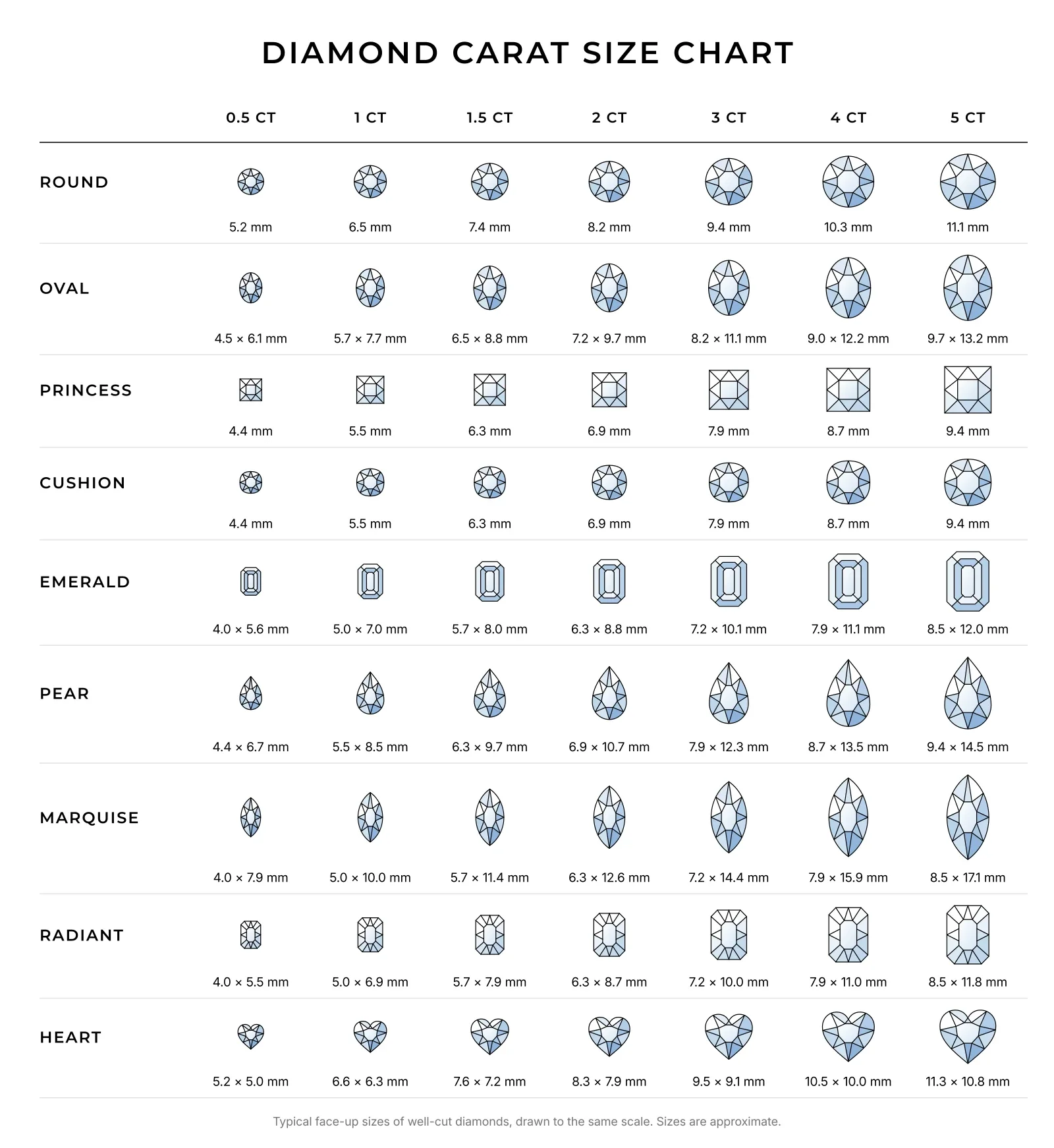
A diamond carat size chart turns carat weight into face-up size in millimeters. A 1 carat round diamond is about 6.5 mm across, a 2 carat about 8.2 mm and a 3 carat about 9.4 mm. Carat measures weight, not size, so the same weight looks larger in long shapes such as oval, pear and marquise, and a little smaller in deep shapes such as princess.
Below is the chart for nine diamond shapes from 0.5 to 5 carats, why two diamonds of the same weight can look different, how each size looks on the hand, and how to choose the right carat for a ring or a pair of studs.
A carat is a unit of weight. One carat equals 0.2 grams (200 milligrams), about the weight of a paperclip, and it weighs the same everywhere in the world.
Points. A carat is divided into 100 points, like a dollar into cents. A 50-point diamond weighs 0.50 carat.
Precision. Diamonds are weighed very precisely and the weight is rounded to the nearest hundredth of a carat, so you'll see weights such as 0.92 or 1.08 carats.
Weight, not size. Carat tells you how heavy a diamond is. How big it looks depends on its shape and how it's cut, which is why a size chart in millimeters is useful.
Don't confuse carat with karat. Karat measures how much pure gold is in a metal, as in 10K, 14K or 18K gold. These definitions follow GIA's guide to carat weight. Carat is one of the 4Cs, with cut, color and clarity. For how the four fit together, read our guide to the 4Cs.
The sizes below are the typical face-up size of a well-cut diamond, seen from above, rounded to 0.1 mm. Round and square shapes have one number. Long shapes are shown as width × length.
We start from the typical size of a well-cut 1 carat stone in each shape and scale it by the cube root of the weight, because a diamond grows in three directions as its weight goes up. That's why a 2 carat diamond is only about 26% wider than a 1 carat, not twice as wide. These are the same sizes our Carat Size Guide uses on engagement ring pages. A real diamond can measure a few tenths of a millimeter more or less, and its grading report lists its exact measurements.
0.5 ct: 5.2 mm
0.75 ct: 5.9 mm
1 ct: 6.5 mm
1.5 ct: 7.4 mm
2 ct: 8.2 mm
2.5 ct: 8.8 mm
3 ct: 9.4 mm
4 ct: 10.3 mm
5 ct: 11.1 mm
0.5 ct: 4.5 × 6.1 mm
0.75 ct: 5.2 × 7.0 mm
1 ct: 5.7 × 7.7 mm
1.5 ct: 6.5 × 8.8 mm
2 ct: 7.2 × 9.7 mm
2.5 ct: 7.7 × 10.5 mm
3 ct: 8.2 × 11.1 mm
4 ct: 9.0 × 12.2 mm
5 ct: 9.7 × 13.2 mm
0.5 ct: 4.4 mm
0.75 ct: 5.0 mm
1 ct: 5.5 mm
1.5 ct: 6.3 mm
2 ct: 6.9 mm
2.5 ct: 7.5 mm
3 ct: 7.9 mm
4 ct: 8.7 mm
5 ct: 9.4 mm
0.5 ct: 4.4 mm
0.75 ct: 5.0 mm
1 ct: 5.5 mm
1.5 ct: 6.3 mm
2 ct: 6.9 mm
2.5 ct: 7.5 mm
3 ct: 7.9 mm
4 ct: 8.7 mm
5 ct: 9.4 mm
These cushion sizes are for a square cushion. A rectangular, or elongated, cushion is narrower and longer.
0.5 ct: 4.0 × 5.6 mm
0.75 ct: 4.5 × 6.4 mm
1 ct: 5.0 × 7.0 mm
1.5 ct: 5.7 × 8.0 mm
2 ct: 6.3 × 8.8 mm
2.5 ct: 6.8 × 9.5 mm
3 ct: 7.2 × 10.1 mm
4 ct: 7.9 × 11.1 mm
5 ct: 8.5 × 12.0 mm
0.5 ct: 4.4 × 6.7 mm
0.75 ct: 5.0 × 7.7 mm
1 ct: 5.5 × 8.5 mm
1.5 ct: 6.3 × 9.7 mm
2 ct: 6.9 × 10.7 mm
2.5 ct: 7.5 × 11.5 mm
3 ct: 7.9 × 12.3 mm
4 ct: 8.7 × 13.5 mm
5 ct: 9.4 × 14.5 mm
0.5 ct: 4.0 × 7.9 mm
0.75 ct: 4.5 × 9.1 mm
1 ct: 5.0 × 10.0 mm
1.5 ct: 5.7 × 11.4 mm
2 ct: 6.3 × 12.6 mm
2.5 ct: 6.8 × 13.6 mm
3 ct: 7.2 × 14.4 mm
4 ct: 7.9 × 15.9 mm
5 ct: 8.5 × 17.1 mm
0.5 ct: 4.0 × 5.5 mm
0.75 ct: 4.5 × 6.3 mm
1 ct: 5.0 × 6.9 mm
1.5 ct: 5.7 × 7.9 mm
2 ct: 6.3 × 8.7 mm
2.5 ct: 6.8 × 9.4 mm
3 ct: 7.2 × 10.0 mm
4 ct: 7.9 × 11.0 mm
5 ct: 8.5 × 11.8 mm
These radiant sizes are for a rectangular radiant. A square radiant is shorter and wider.
0.5 ct: 5.2 × 5.0 mm
0.75 ct: 6.0 × 5.7 mm
1 ct: 6.6 × 6.3 mm
1.5 ct: 7.6 × 7.2 mm
2 ct: 8.3 × 7.9 mm
2.5 ct: 9.0 × 8.6 mm
3 ct: 9.5 × 9.1 mm
4 ct: 10.5 × 10.0 mm
5 ct: 11.3 × 10.8 mm
A heart is often a little wider than it is long. Asscher isn't in the chart. Like a princess, it's cut deep, so it looks a little smaller from above than a round of the same weight. For more on how shape changes apparent size, see our diamond shapes guide.
Because carat is weight, not size. Cut, depth, shape and setting all change how much of that weight you see from above.
Cut and depth. A round diamond cut too deep carries extra weight underneath, where you can't see it, so it looks smaller from the top. One cut too shallow spreads wider but can leak light and look dull. A well-cut stone balances size and sparkle.
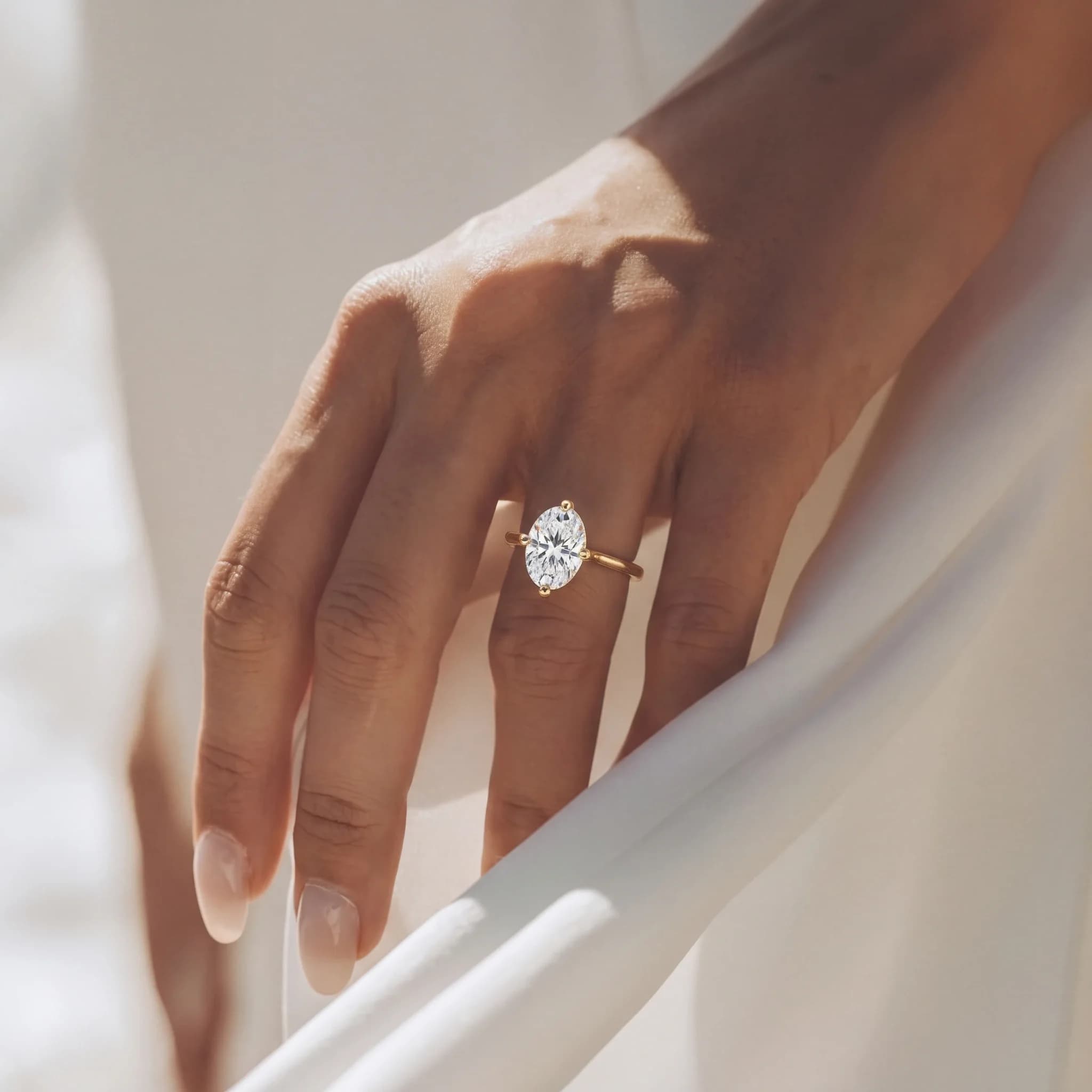
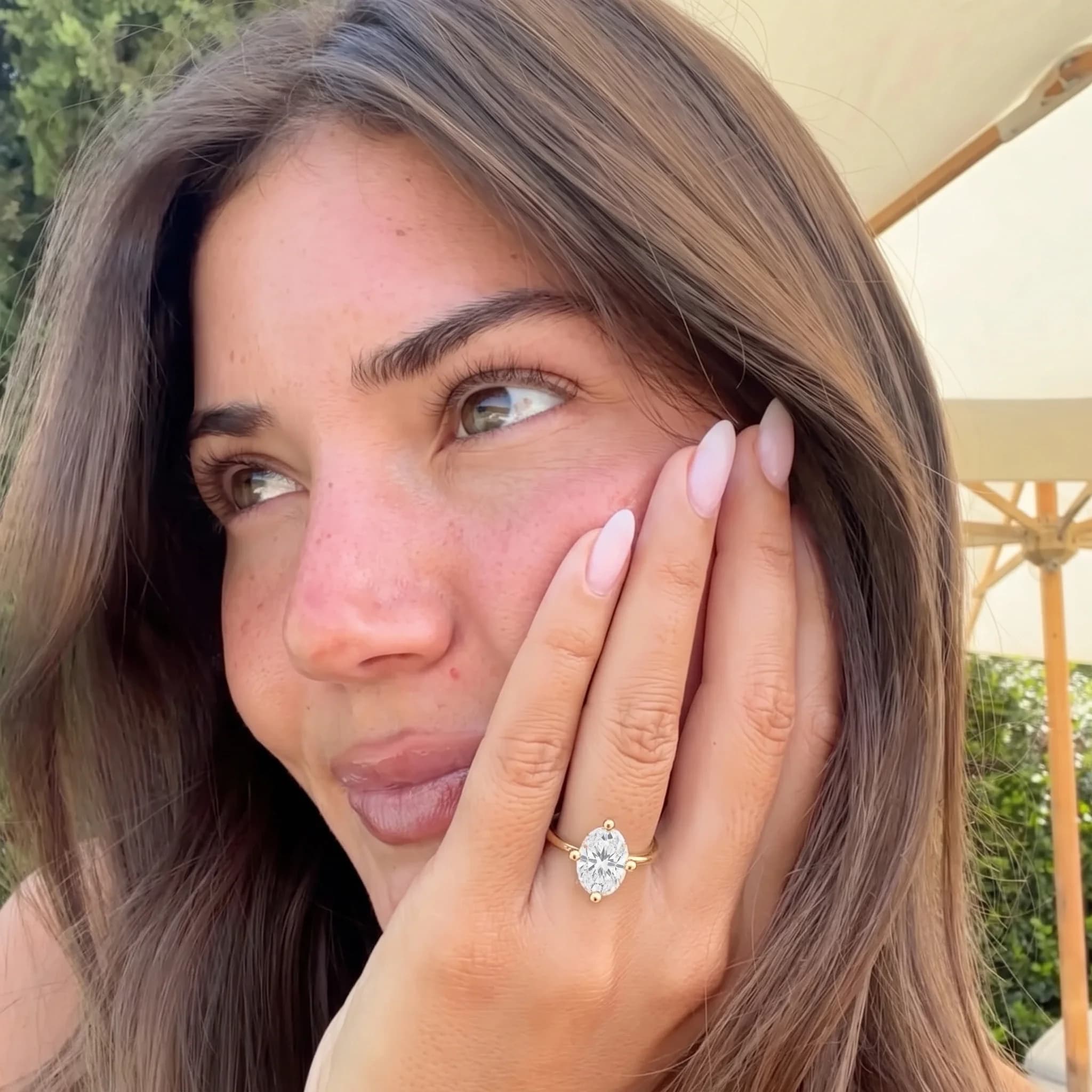
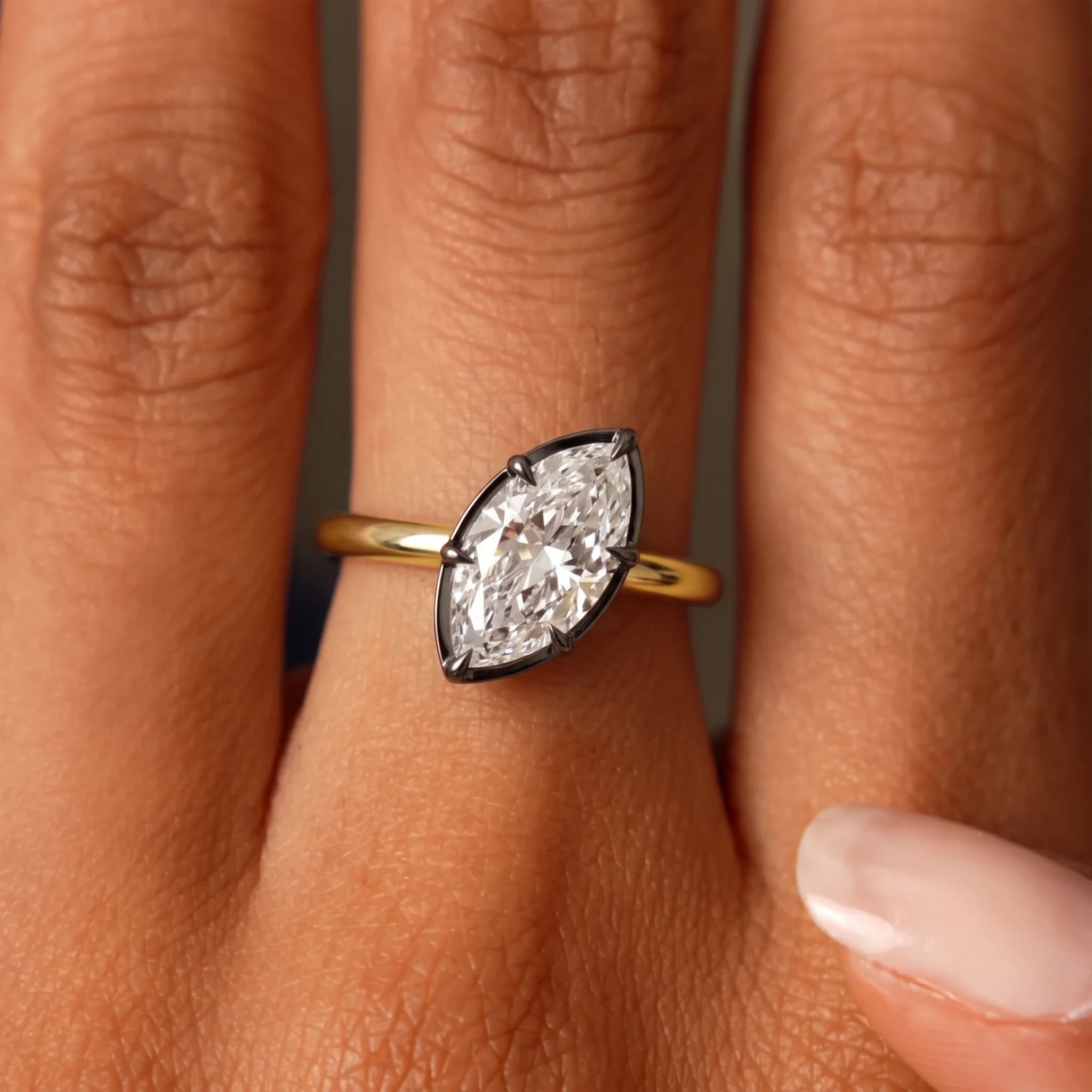
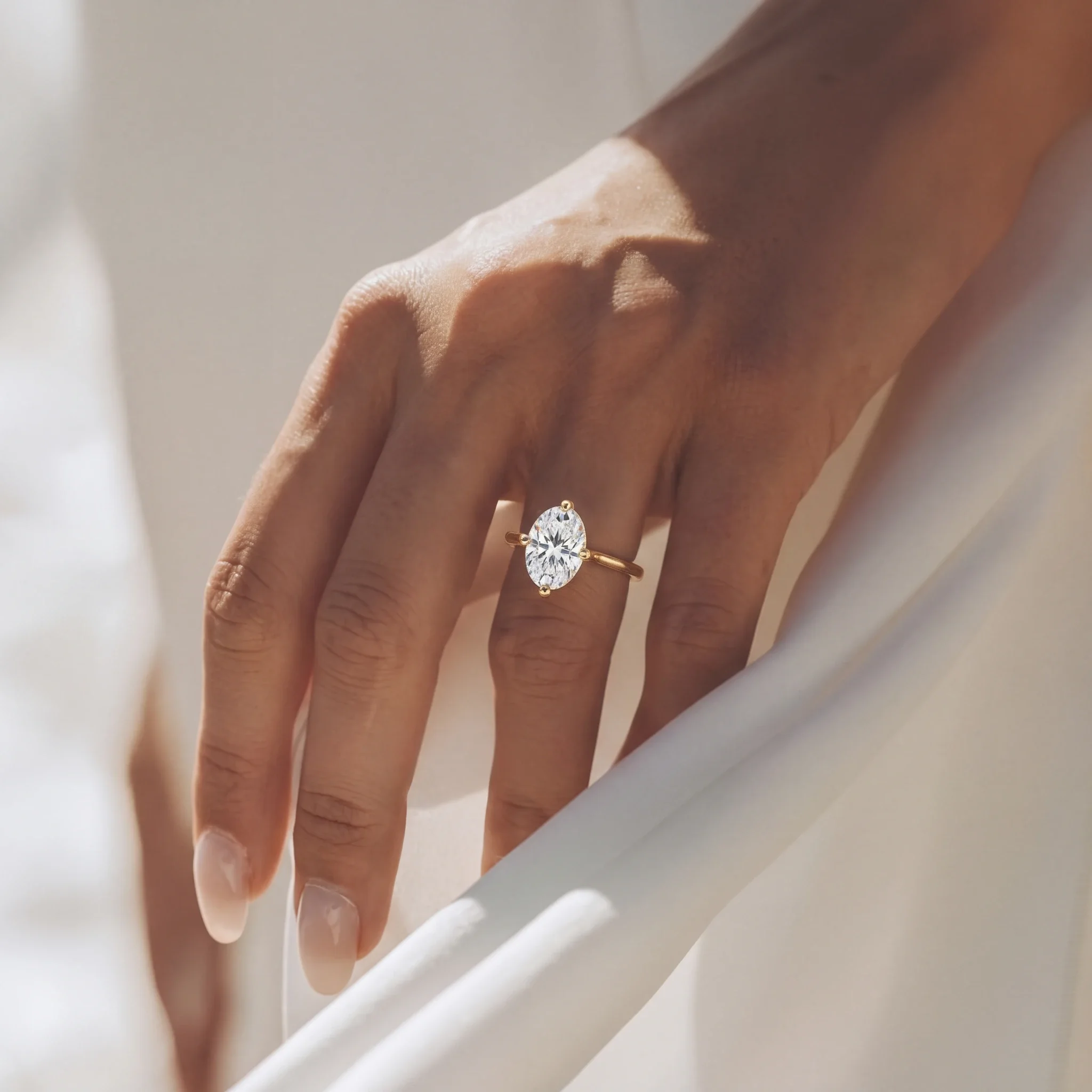
Shape. Long shapes spread their weight across a longer outline. A 1 carat oval is about 7.7 mm long, about 18% longer than a 1 carat round, and a 1 carat marquise is about 10 mm long. Deep shapes such as princess and asscher look a little smaller.
Spread. Jewelers call a diamond's face-up size for its weight its spread. Two 1.00 carat rounds can differ by a few tenths of a millimeter across, and that's easy to see side by side.
Setting. A halo of small diamonds or a bezel rim adds to the size you see. A slim band makes the center stone look larger by contrast.
So compare measurements in millimeters, not only carat weight. A diamond's grading report lists both.
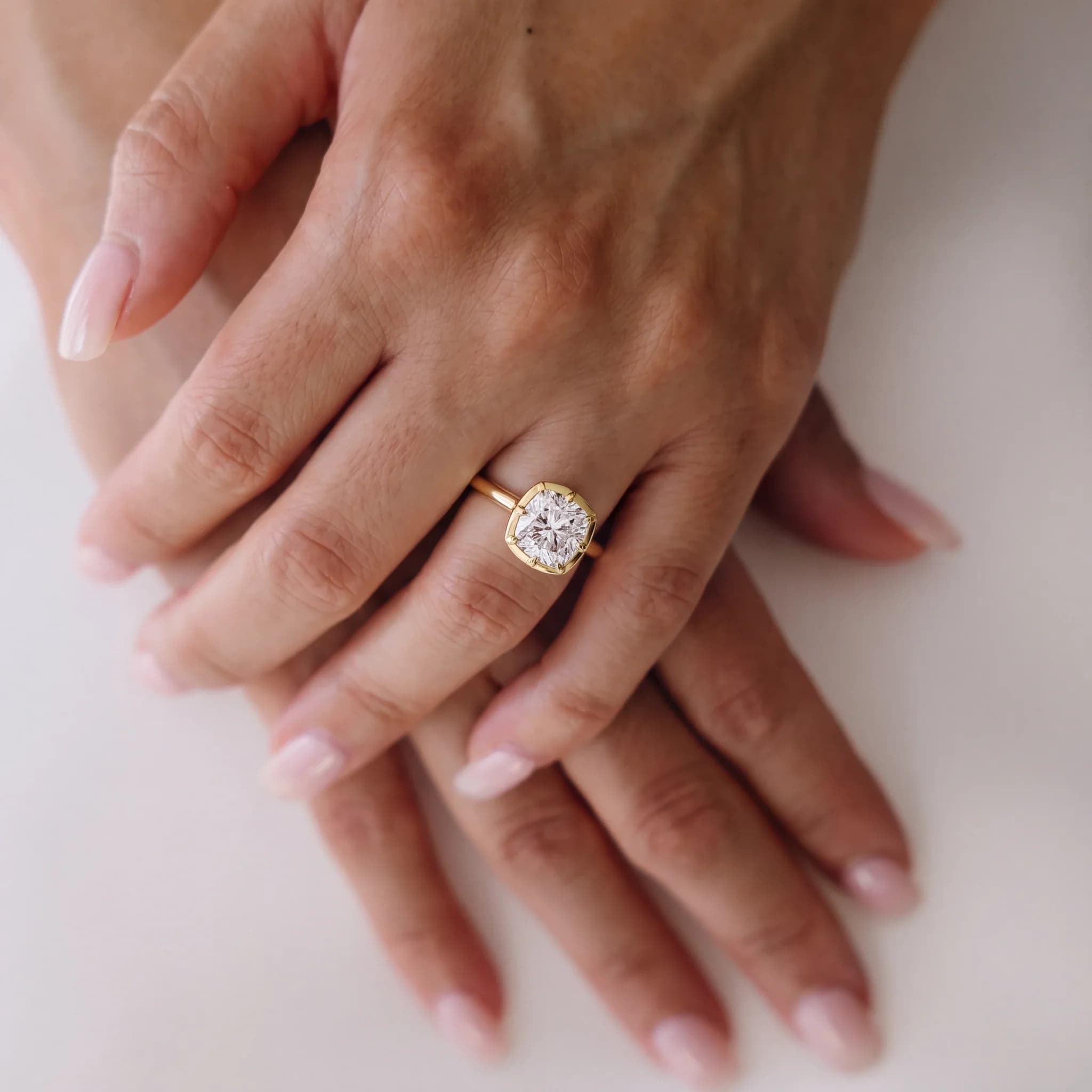
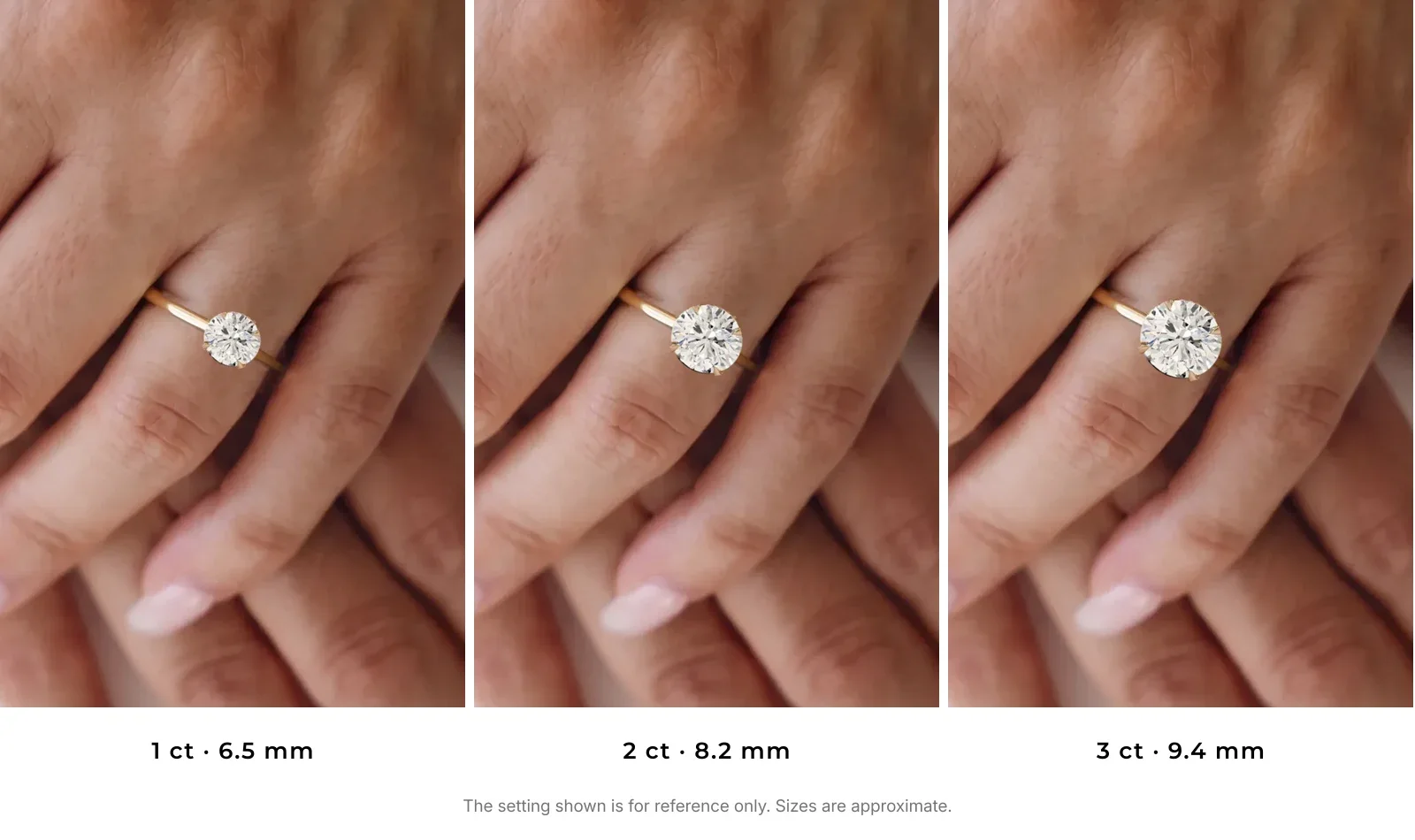
The same diamond looks bigger on a slimmer finger. What matters is how much of the finger's width the stone covers.
Size 4 finger (about 14.9 mm across): a 1 carat round covers about 44% of the width, a 2 carat about 55%.
Size 6 finger (about 16.5 mm): a 1 carat round covers about 39%, a 2 carat about half.
Size 8 finger (about 18.1 mm): a 1 carat round covers about 36%, a 2 carat about 45%.
Finger widths here are the inside diameters of each ring size, so treat them as a close guide. If you don't know the size yet, use our ring size guide.
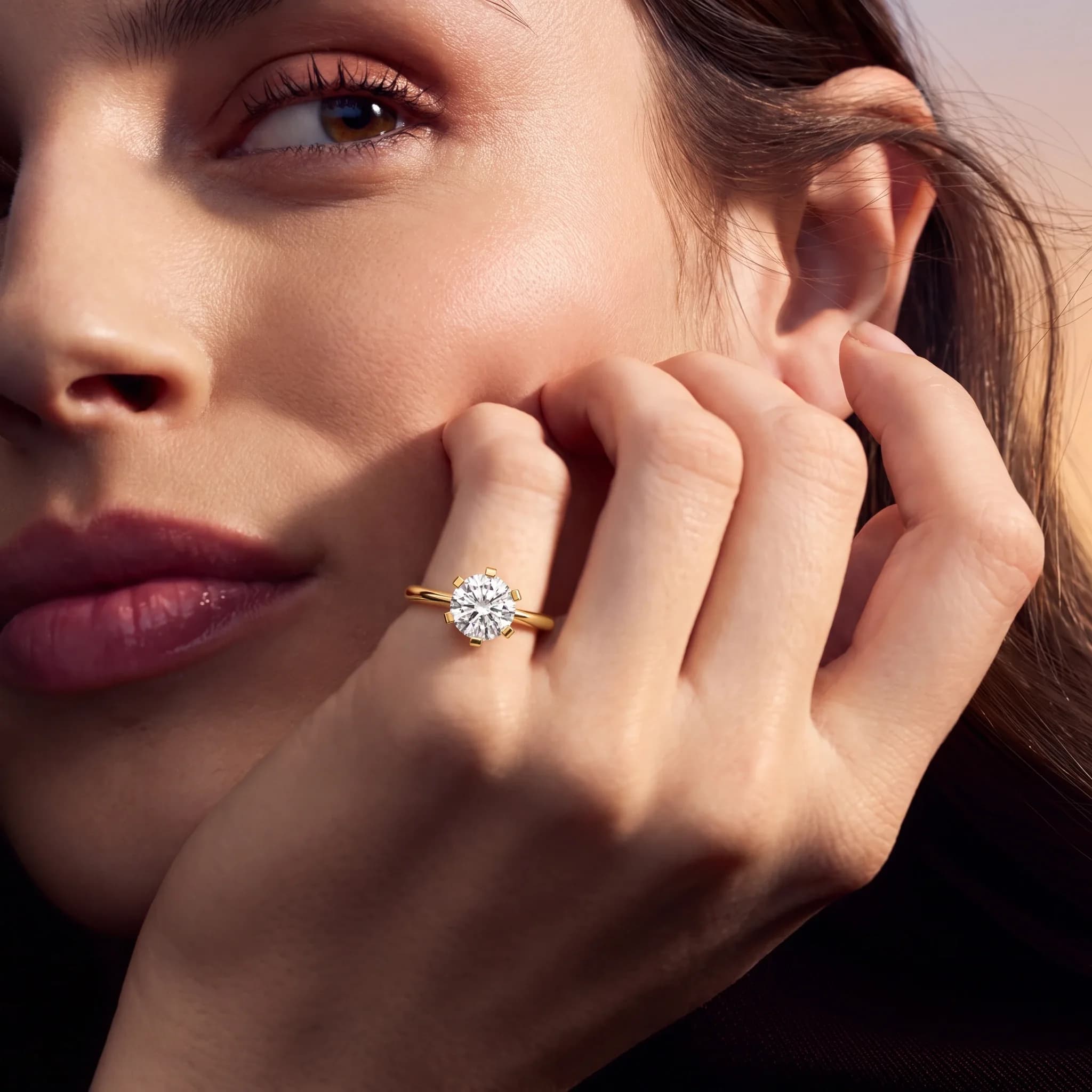
To see it for yourself, use the Carat Size Guide on most of our engagement ring pages. It shows a real hand with a diamond in that ring's shape, drawn at its true size from 1.0 to 5.0 carats. Slide between sizes to compare. On a computer it's in the photo gallery. On a phone it sits just above the ring size. The setting in the guide is for reference only, and sizes are approximate.
Yes. A 1 carat diamond is a good size for an engagement ring. A round one is about 6.5 mm across and clearly visible on most hands. It's also larger than most diamonds in jewelry: GIA notes that the majority of diamonds used in fine jewelry weigh one carat or less.
Many couples choose larger. The Knot's 2026 Real Weddings Study, as cited in our engagement ring cost guide, put the average center stone at about 1.6 carats for natural diamonds and about 2.0 carats for lab-grown ones.
Whether 1 carat is right for you depends on four things:
Hand and finger size. On a slim finger, 1 carat looks generous. On a larger hand, it looks more modest.
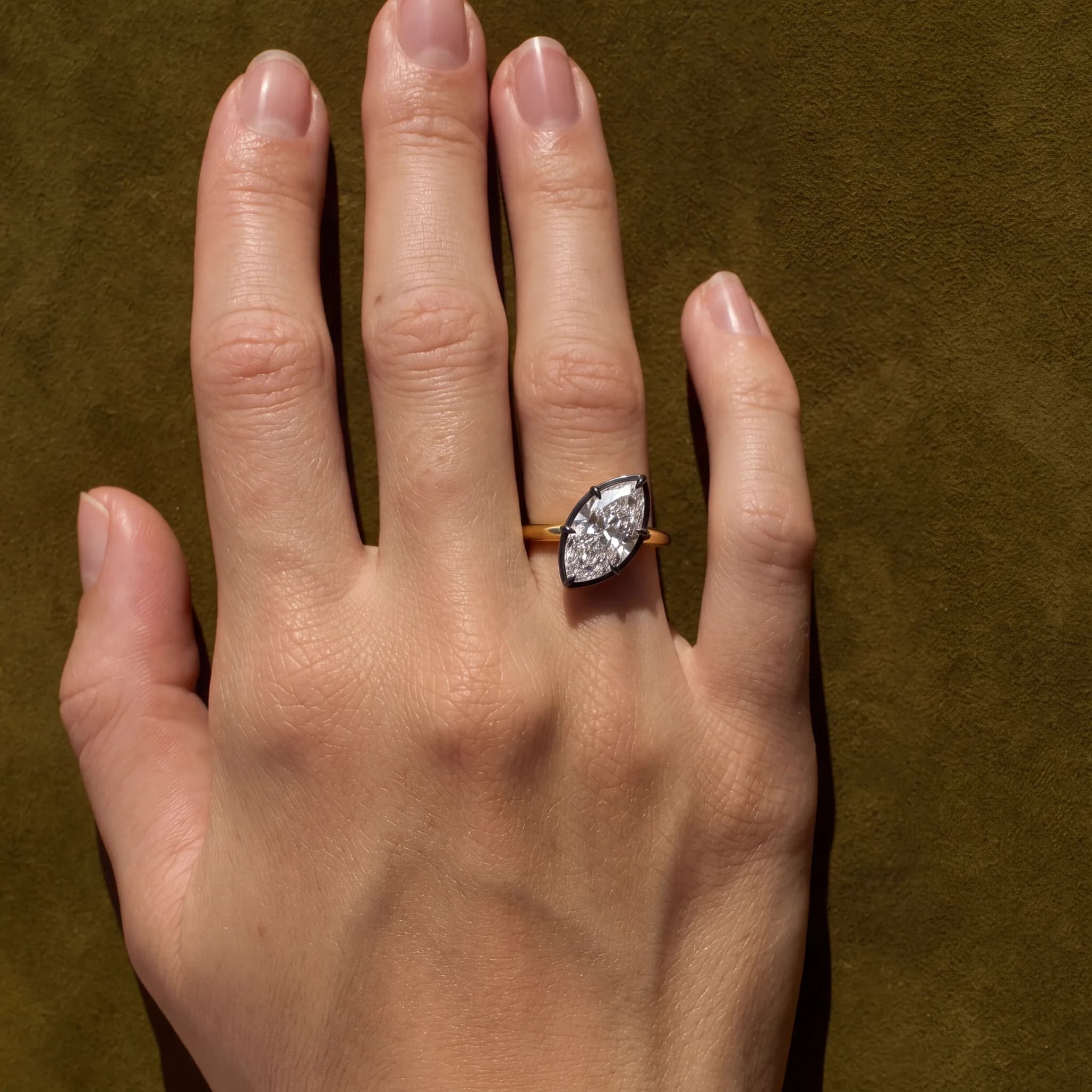
Shape. A 1 carat oval, pear or marquise looks larger than a 1 carat round.
Setting. A halo or bezel makes it look larger. A tall solitaire setting shows it off on its own.
Budget. A slightly smaller, well-cut stone often looks better than a larger, poorly cut one.
Yes. A 2 carat round is about 8.2 mm across, covers about half the width of a size 6 finger, and is a noticeable stone on almost any hand. It covers about 1.6 times the area of a 1 carat round from above, not twice the area.
There's no single perfect size. Choose the size that looks right on the hand and fits your budget after you've chosen a good cut. Start with your shape, check the millimeters on the chart, then try sizes in the Carat Size Guide.
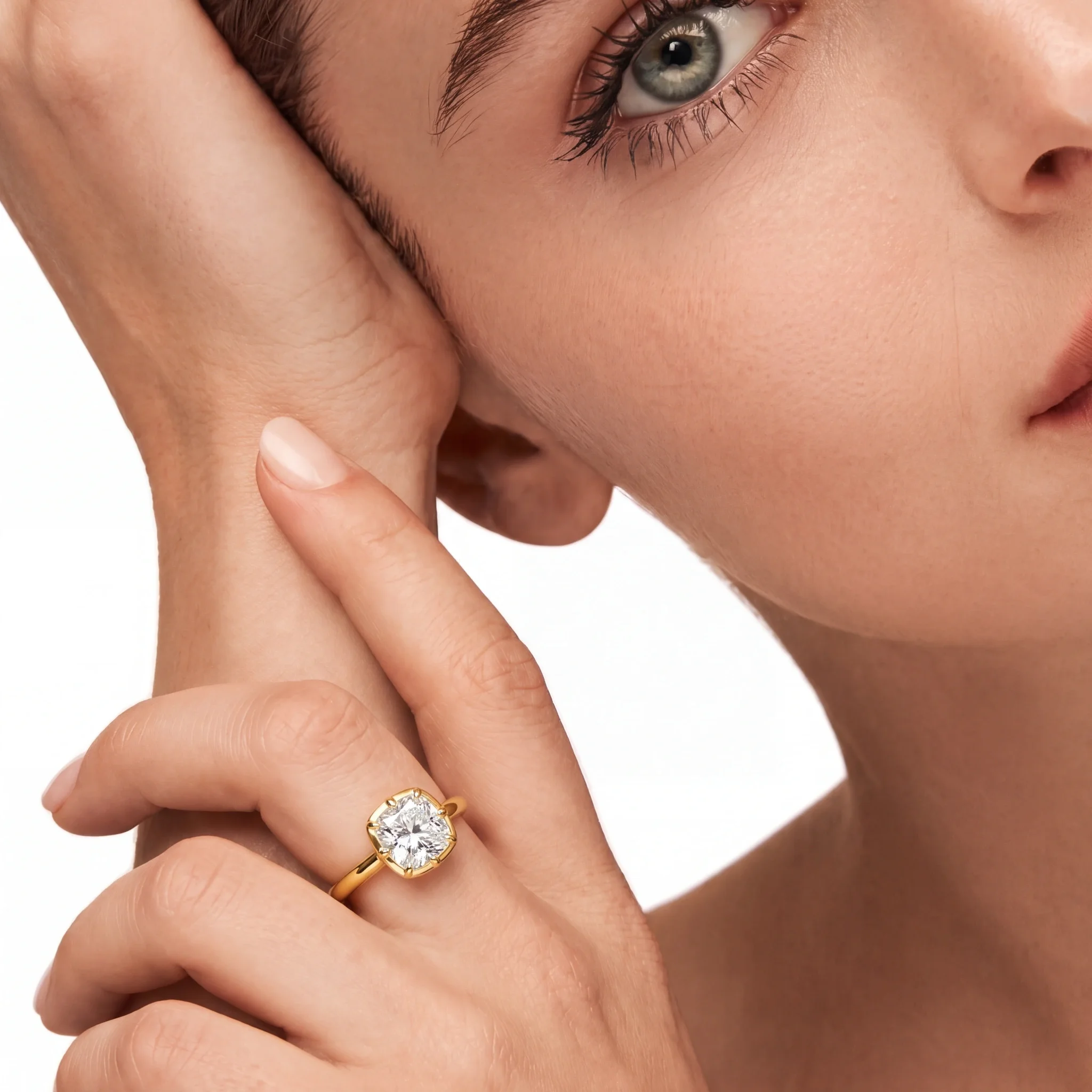
Price rises faster than carat weight. Larger diamonds are rarer, so they cost more per carat, not just more in total. One 1 carat diamond weighs the same as four 0.25 carat diamonds, but with the same quality it costs much more than all four together.
Popular weights cost more. Prices step up at weights such as 0.50, 0.75 and 1.00 carat, which jewelers call magic sizes.
Just under looks the same. A 0.90 carat round is about 6.3 mm across and a 1.00 carat about 6.5 mm. Few people can see that difference, and the lighter stone often costs noticeably less.
Shape changes the price. A round usually costs more per carat than other shapes. Long shapes also look larger, so a smaller weight can give the same look.
The other Cs matter. Two diamonds of the same weight can differ a lot in price because of their cut, color and clarity.
How big a diamond will a given budget buy? There's no fixed answer, because shape, quality and whether the diamond is lab-grown or natural all change the price. For budget rules and ways to save, read how much an engagement ring should cost. To compare finished rings, view engagement ring designs.
A lab-grown diamond is the same size as a natural diamond of the same weight, shape and cut, because both are the same material. The difference is price. A lab-grown diamond generally costs far less than a natural one of the same size and quality, so the same budget buys a larger stone.
That's why, in The Knot's 2026 study, couples who chose lab-grown spent less on average and still ended up with a larger center stone. Both kinds are graded on the same 4Cs, and the grading report records the carat weight to the hundredth.
House of Diams pieces are set with lab-grown diamonds and come with an IGI or GIA certificate. Read lab-grown vs natural diamonds for the full comparison, what lab-grown diamonds are if they're new to you, and GIA vs IGI certification to see what a report shows.
ct is the weight of one diamond. A "1 ct" solitaire has one diamond of about one carat.
ctw (or tw, total weight) is the combined weight of every diamond in the piece. A ring with a center stone and small side diamonds can be "1.50 ctw" with a center stone well under 1.50 carats, so check the center stone's own weight.
Fractions are rounded labels: 1/4 carat is 0.25, 1/3 is about 0.33, 1/2 is 0.50 and 3/4 is 0.75. A stone sold as 1/2 carat may weigh a little more or less than 0.50, so look for the exact decimal weight on the report.
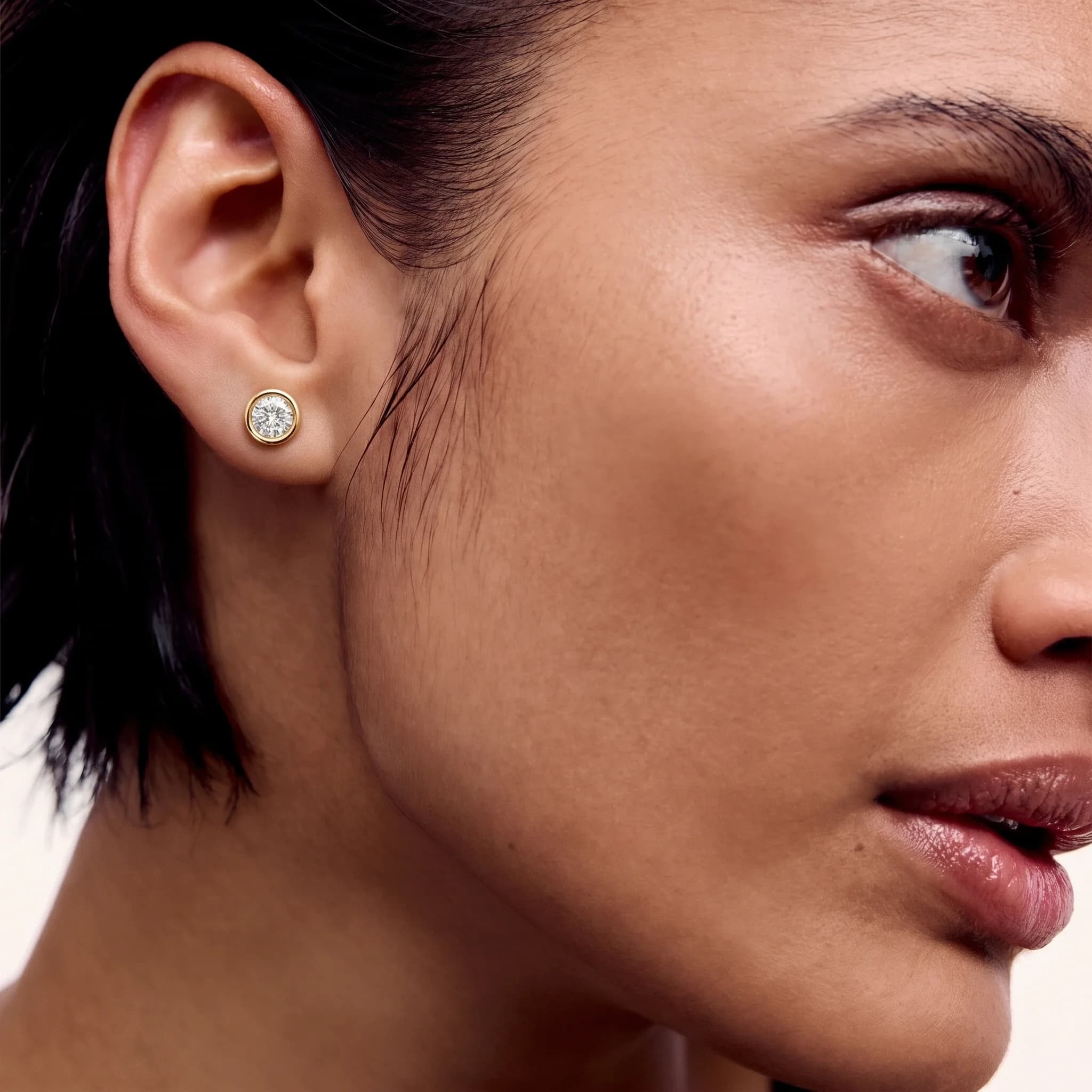
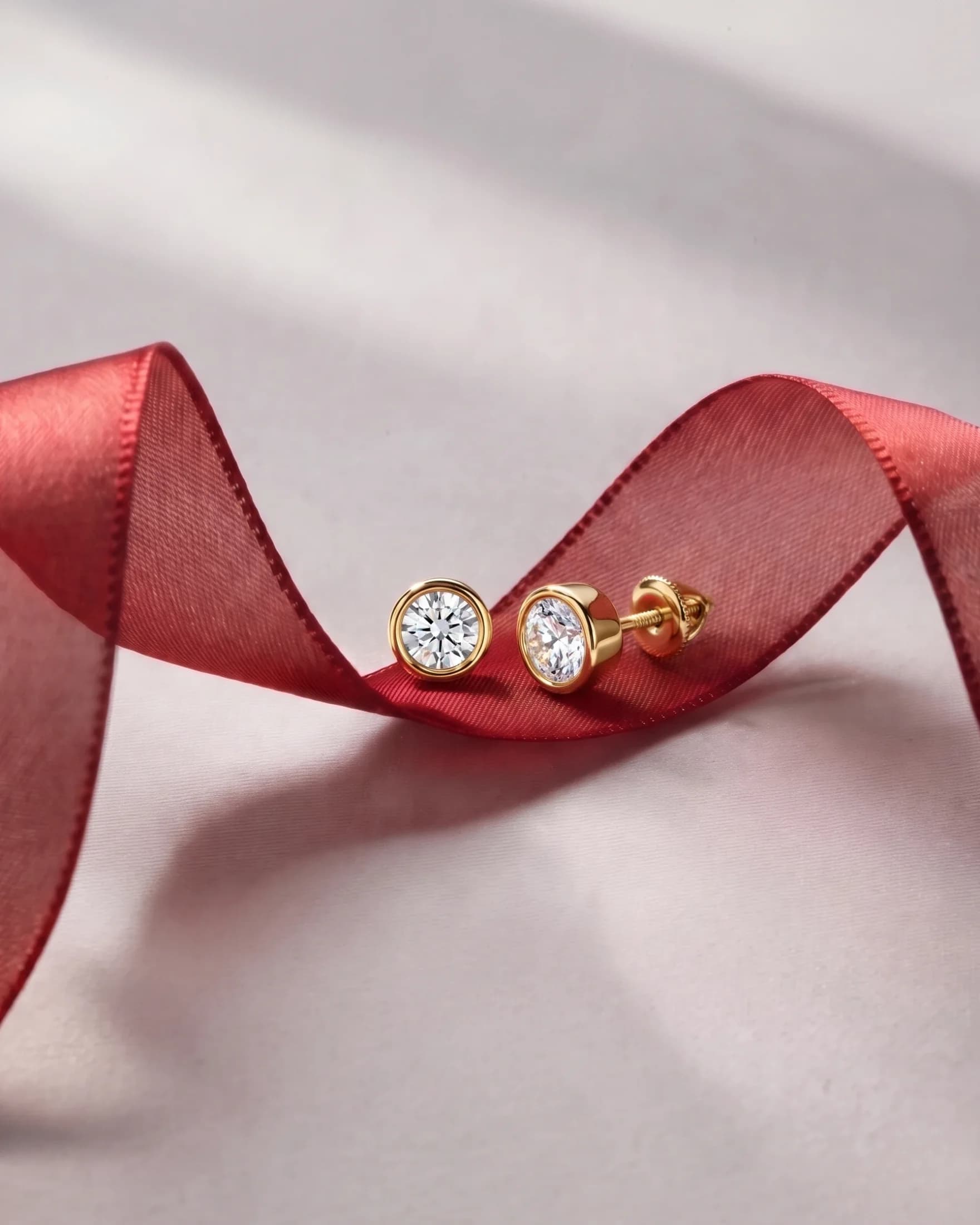
Diamond stud earrings are usually described by total carat weight, the combined weight of both stones. So each earring holds about half the ctw. For round studs:
0.50 ctw: two 0.25 carat diamonds, about 4.1 mm each
1.00 ctw: two 0.50 carat diamonds, about 5.2 mm each
1.50 ctw: two 0.75 carat diamonds, about 5.9 mm each
2.00 ctw: two 1.00 carat diamonds, about 6.5 mm each
3.00 ctw: two 1.50 carat diamonds, about 7.4 mm each
4.00 ctw: two 2.00 carat diamonds, about 8.2 mm each
What size diamond earrings should you choose? Studs up to about 0.50 ctw are small and discreet. Around 1.00 to 1.50 ctw shows clearly on the ear for everyday wear. From 2.00 ctw, studs make more of a statement. A bezel or halo setting makes each stone look larger.
Is a 1/2 carat diamond good for earrings? Yes. As a pair, 1/2 ctw gives two small, bright studs of about 4.1 mm. As 1/2 carat per ear (1 ctw), each stone is about 5.2 mm, a size that's easy to see. Clarity matters less in small stones seen from a distance, as our diamond clarity guide explains. Browse diamond stud earrings to compare sizes.
About 6.5 mm across for a round. A 1 carat oval is about 5.7 × 7.7 mm, a princess or cushion about 5.5 mm, and a marquise about 5.0 × 10.0 mm.
For small, delicate jewelry, yes. In a pair of studs, 1/4 ctw means two diamonds of about 0.125 carat, about 3.3 mm each. As a ring's center stone, a quarter carat is small, so it suits a dainty style or a promise ring more than a classic solitaire.
Yes, if it's well cut and graded by a recognized laboratory. A 2 carat lab-grown diamond is the same size as a 2 carat natural diamond, about 8.2 mm across in a round, and it usually costs far less. Check its cut, color and clarity on the report, just as you would for a natural stone.
It depends on your taste and your hand. A 2 carat stone is noticeable, and it looks larger again on a slim finger or in a long shape. If you prefer a quieter look, a bezel setting or a lower profile keeps it closer to the hand.
No. Carat only tells you the weight. Quality comes from cut, color and clarity, and cut has the biggest effect on sparkle. A smaller, well-cut diamond can look brighter than a larger, poorly cut one.
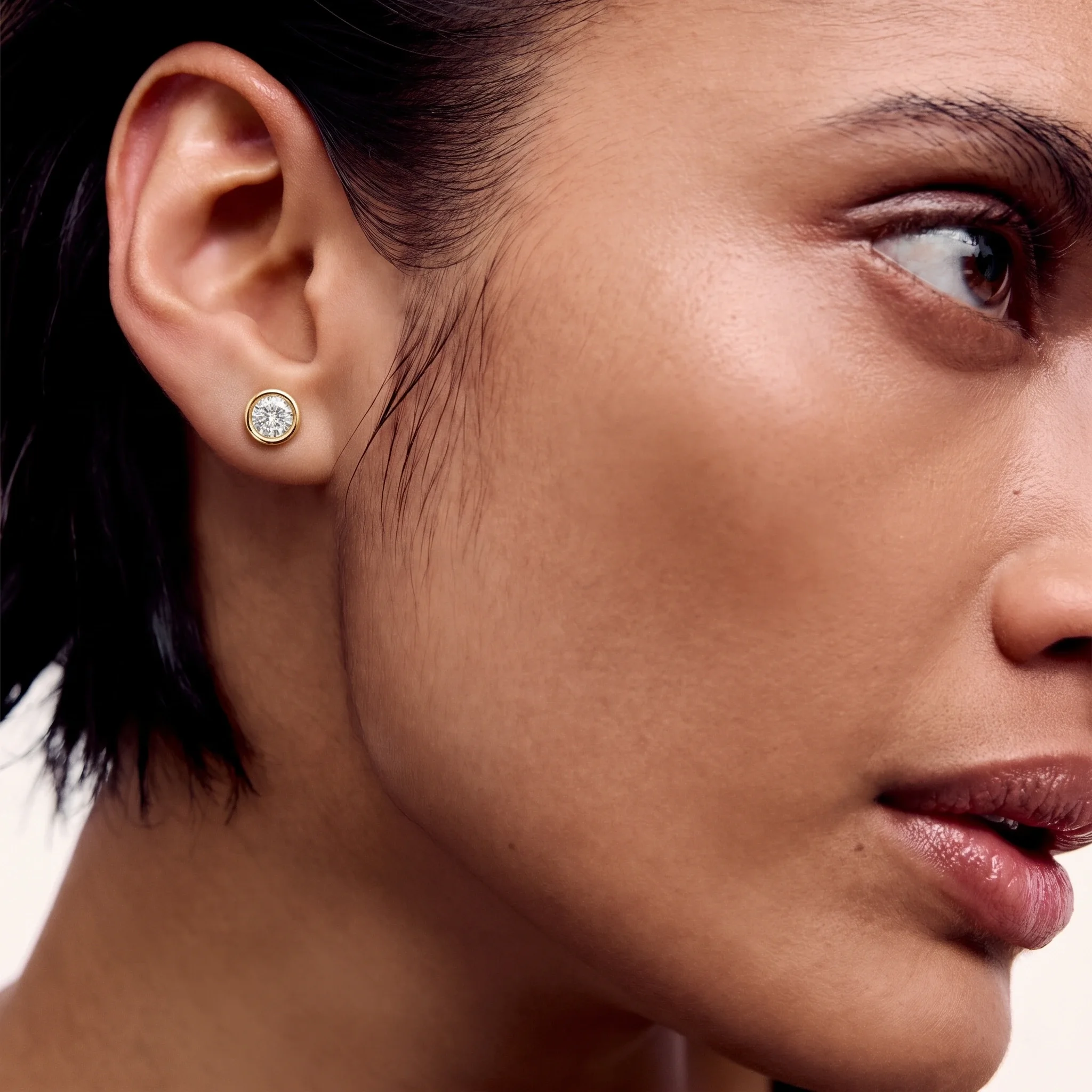
Browse our engagement rings and use the Carat Size Guide on each ring's page to see sizes on a hand, or compare diamond stud earrings. For more on diamond quality, see our diamond quality guides. If you have a question about a size, contact us.
The diamond color scale from D to Z in one chart: what each grade looks like, how color shows in white, yellow and rose gold, and which color to buy.
Read article
A diamond clarity chart from Flawless to I3: what each grade means, which grades look clean to the eye and which clarity to buy.
Read article
Use our necklace length chart to see where 14 to 36 inches sits. Learn how to measure, compare 16 vs 18 inch necklaces and pick a length for any pendant.
Read article


